



Almost every print shop eventually runs all three of these methods: screen printing, direct-to-garment (DTG), and heat transfer (including DTF — direct-to-film). They overlap in the middle but each one dominates a specific corner of the quote sheet. The shop that knows which to use on which job is the shop that stays profitable.
The one-line summary
- Screen printing: cheapest above ~36 pieces; highest startup cost; best for solid-color designs at volume.
- DTG: cheapest for photo-realistic 1-offs; highest per-shirt ink cost; limited to cotton-rich fabrics.
- Heat transfer / DTF: cheapest startup; best for small quantities and multi-fabric orders; durability varies widely by vendor.
Where each method wins
Screen printing wins when:
- Order is 36+ pieces of the same design
- Design has 6 or fewer solid colors (no photographs)
- Customer wants “that retail feel” (plastisol, true spot colors)
- The shirt will see 50+ wash cycles
Per-shirt cost at volume: $0.80–$2.50 decoration. The kill shot is the setup labor — burning screens, mixing inks, registering the press takes 45 minutes before the first shirt goes through. You need volume to amortize that.
DTG wins when:
- Order is 1–24 pieces with complex artwork
- The design is a photograph or has more than 8 colors
- You need different sizes/colors mixed into the order
- Customer wants a “sample” before committing to a big run
- The blank is 100% cotton (or 90%+ cotton)
Per-shirt cost: $4.50–$8.00 ink + labor. DTG machines also pretreat the garment before printing (so white ink bonds), which adds time per shirt.
Which method wins the job?
- 1
Under ~24 pieces → DTG or DTF
No screens to burn, no setup to amortize
- 2
24–72 pieces, simple art → toss-up
Quote both; setup vs per-piece cost cross here
- 3
72+ pieces or spot colors → screen printing
Setup disappears into the run
- 4
Photoreal art on darks → DTG
Halftone separations can't match it
- 5
Polyester performance wear → DTF
Bonds to poly without dye-migration drama
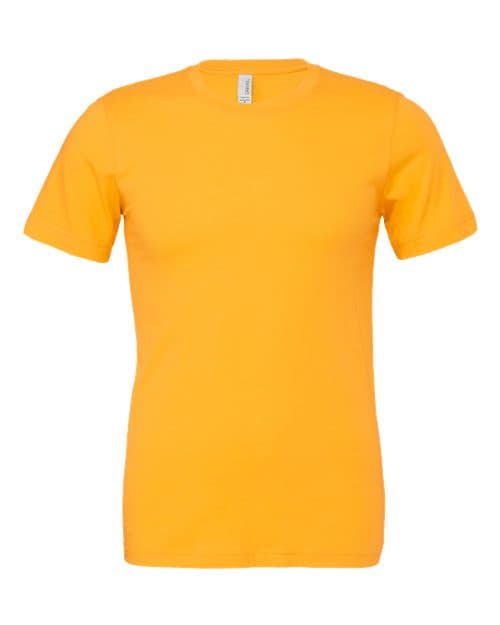
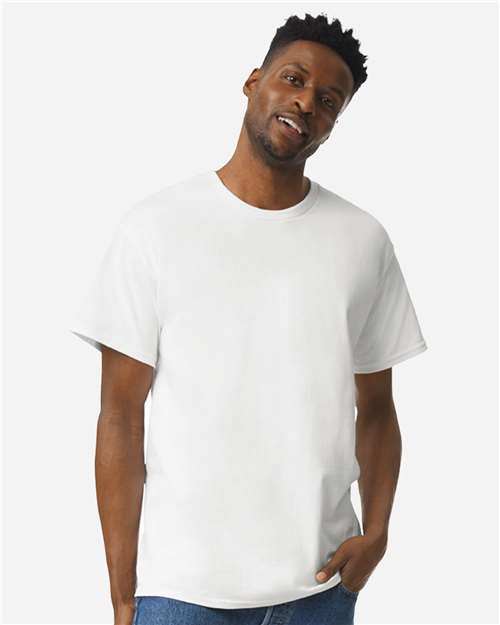
DTG gotcha: polyester and triblends don’t print well. The pretreat reacts with the polyester and dye-migrates — your bright white turns ghost gray after a couple washes. Stick to cotton-rich blanks like BELLA 3001 or Gildan Softstyle 64000.
Heat transfer / DTF wins when:
- Quantity is 1–12 pieces
- You’re mixing shirt types in one order (polos + hoodies + tees)
- You need to print on polyester or performance fabric
- The customer brings their own blank
- You want zero setup time between jobs
Per-shirt cost: $1.50–$4.00 transfer + labor depending on whether you print the transfers in-house or buy them pre-made. DTF has a higher startup cost (a DTF printer + powder shaker is $3,000–$12,000) but no screens, no curing chemistry, and almost no setup per job.
Heat transfer gotcha: hand feel. A low-quality transfer sits on top of the fabric like a sticker. A premium DTF feels almost like a screen print. Get samples from 3 vendors before you commit to a supplier — quality varies 5x between them.
The crossover chart
Roughly where each method becomes the cheapest option (assuming a 2-color design on a $4.50 blank):
- 1–12 pieces: Heat transfer / DTF
- 12–35 pieces: DTG (or DTF for non-cotton)
- 36+ pieces: Screen printing
A 6-color photo-realistic design on 100 shirts is an edge case where the crossover moves — DTG stays competitive up to about 60 pieces on complex art because screen printing a 6-color halftone takes an hour of setup.
Durability comparison (laundry test)
We ran 50 wash-and-dry cycles on three identical blanks printed with each method:
- Screen print (plastisol): No visible wear, no color loss. The classic reason it’s still the industry standard.
- DTG: ~10% color fade by cycle 25. Still presentable at cycle 50 but noticeably softer than original.
- Heat transfer (hobbyist grade): Edge lifting by cycle 15. Complete delamination by cycle 40.
- DTF (pro grade): No visible wear at cycle 50. Matches or beats screen printing.
The takeaway: cheap heat transfers destroy your reputation. Either invest in pro-grade DTF or skip it entirely.
Which method should a new shop start with?
Most new shops we’ve watched launch with either:
- Option A: Manual screen press + DTF printer. Total startup ~$9,000–$15,000. You can quote any job that walks in the door, from a single event shirt to 500 team jerseys. This is our recommended combo.
- Option B: DTG only. Total startup ~$18,000–$25,000 for an entry-level commercial DTG. Higher cost to start but zero setup between jobs. Works if your niche is print-on-demand, Etsy, or custom 1-off merch.
Whichever path you take, you’ll save cash by not stocking a warehouse of blanks. Pull inventory only for your booked jobs and have the blanks shipped plain-packed to your shop the day you need them. Start your cart here — we ship same-day on orders placed before 1 PM EST.
Where to buy blanks for any of these methods
B2B Sportswear stocks 200,000+ SKUs across 100+ brands — cotton-rich blanks for DTG, budget heavyweights for screen runs, and polyester performance styles for DTF — at true wholesale pricing from the first piece with no minimums and no annual fee. Six quantity-break tiers apply automatically in the cart, you can mix sizes and colors within a style to hit them, and orders in by 1 PM EST dispatch same day from the closest US warehouse in plain unbranded packaging. Ground shipping is free at $265+. Browse wholesale t-shirts, see bulk pricing, or start with resources built for screen printers.
FAQ
Is DTG or screen printing cheaper?
Screen printing is cheaper above roughly 36 pieces of the same design, at $0.80–$2.50 decoration cost per shirt. DTG is cheaper for 1–24 pieces or photo-realistic artwork, since it has no screen setup but costs $4.50–$8.00 per shirt in ink and labor.
Does DTG printing last as long as screen printing?
Not quite. In a 50-cycle wash test, plastisol screen prints showed no visible wear while DTG faded about 10% by cycle 25. Pro-grade DTF matched screen printing; hobbyist heat transfers delaminated by cycle 40.
Can you DTG print on polyester shirts?
No — the pretreat reacts with polyester and dye migration turns white ink gray within a few washes. Use DTF or screen printing for polyester and triblends, and keep DTG for 90%+ cotton blanks like the BELLA+CANVAS 3001.
What print method is best for small orders under 12 shirts?
Heat transfer or DTF. There is no screen setup, you can mix garment types in one order, and per-shirt cost runs $1.50–$4.00 in transfers plus labor.