

Every January the trend forecasts announce a new “color of the year,” and every December the best-selling blank t-shirt in America is still black. Both things are true at once: the core colors never move, and the trend colors are where the retail margin lives. If you buy wholesale blanks — for a print shop, a merch line, or a promo business — your job isn’t to pick a side. It’s to stock the right ratio of each.
This guide covers what’s actually selling in 2026, how to split your order across core and trend colors, and the part most trend articles skip entirely: how the shirt color changes your print cost.
The eternal core: black, white, navy, heather
Roughly 60–70% of blank tee volume in the wholesale channel moves in just four color families, and this hasn’t changed in a decade:
- Black — the single best-selling t-shirt color, period. Bands, gyms, breweries, contractors, streetwear. Black hides stains, flatters everyone, and never reads as dated.
- White — the cheapest to buy (no dye cost) and the cheapest to print (no underbase). The default for events, giveaways, and full-color DTG work.
- Navy — the corporate and team safe pick. Reads more “professional” than black to older buyers.
- Heather grey / athletic heather — the soft casual staple. Note that heathers are usually a cotton/poly blend even in a “100% cotton” style, which matters for discharge and dye-sublimation work.
A workhorse like the Gildan 5000 comes in 70+ colors, but if you audit any print shop’s reorders, those four families dominate. They are your inventory floor.
What’s actually trending in 2026
1. Garment-dyed earth tones (the Comfort Colors effect)
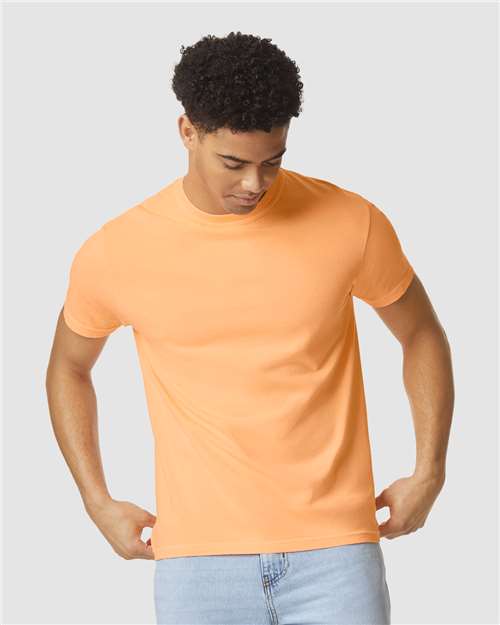
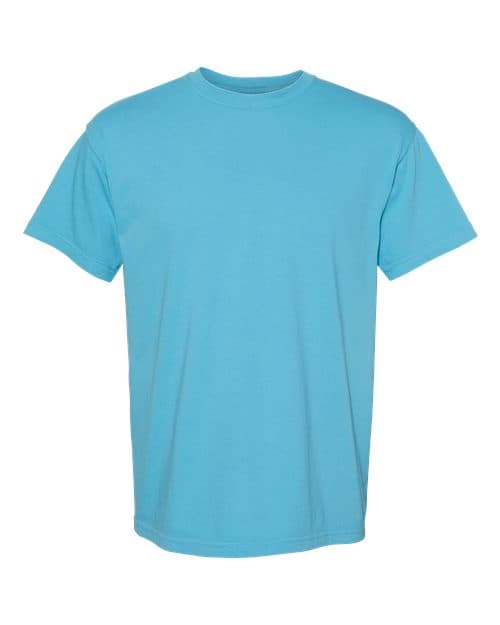
The biggest sustained shift in blank apparel is the move toward garment-dyed, washed-down colors: butter yellow, terracotta, moss, blue jean, ivory, pepper. Comfort Colors built this category, and the 6.1 oz Comfort Colors 1717 is now a top-requested blank for boutique brands, coffee shops, churches, and camp merch. Because the garment is dyed after it’s sewn, every piece has slight shade variation — buyers read that as “vintage” and will pay $10–$15 more retail for it than for a commodity tee.
2. Muted pastels over brights
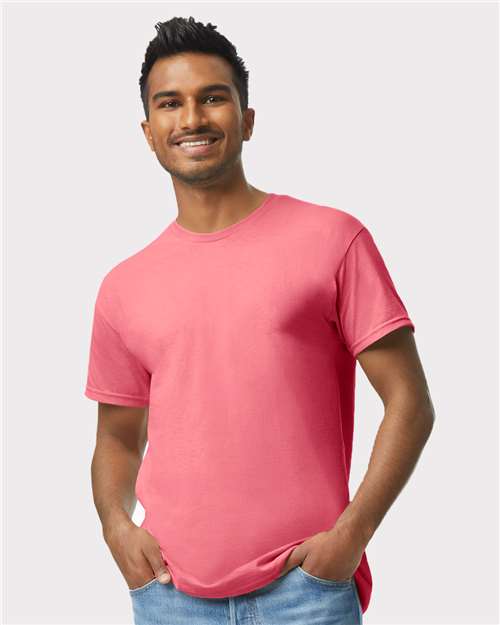
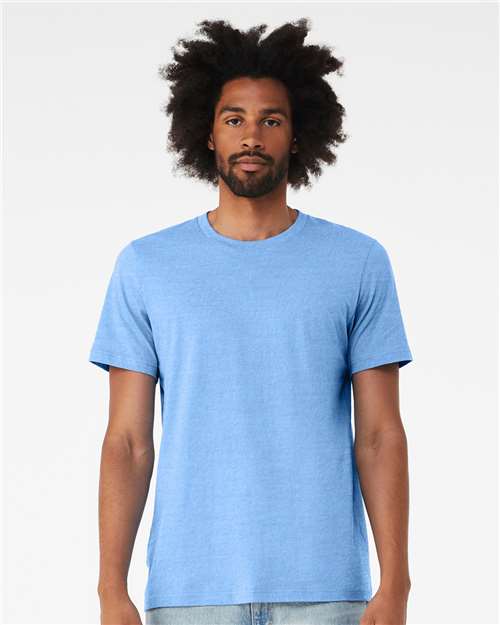
Neon and primary brights keep sliding. The 2026 pastel palette is dusty and desaturated — sage, dusty blue, sand, orchid — and shows up strongest in women’s styles and youth-brand merch. BELLA+CANVAS has leaned hard into this range on the 3001, with heathered and “prism” pastels that photograph well for online stores.
3. Heavyweight neutrals
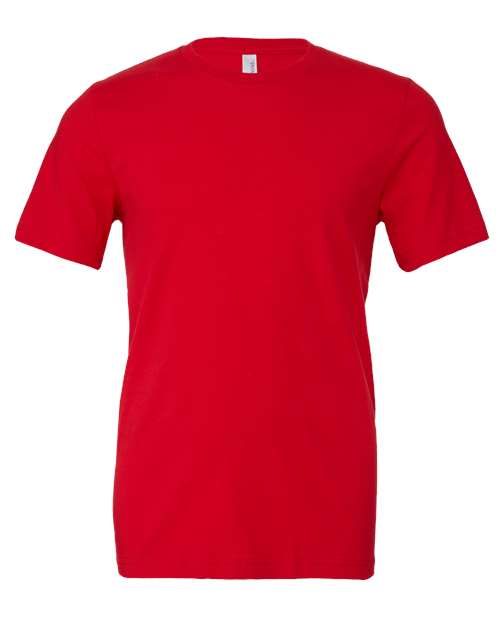
Streetwear’s heavyweight boxy trend keeps pulling demand toward 6 oz+ tees in bone, cement, faded black, and cream. If your customers skew under 30, expect requests for thick blanks in colors that look like they’ve already been washed fifty times.
Stocking ratios that don’t leave dead inventory
Trend colors are where shops get burned: a case of neon coral from two seasons ago is worth nothing. A ratio that holds up across most print businesses:
| Bucket | Share of order | Examples |
|---|---|---|
| Core | 60–65% | Black, white, navy, athletic heather |
| Proven secondary | 20–25% | Red, royal, forest, maroon, dark heather |
| Trend | 10–15% | Garment-dyed earth tones, dusty pastels |
Colorways in stock per staple style
Live counts from our catalog — deep color ranges are why one style can serve a whole merch line.
The trick with the trend bucket: order it against confirmed jobs, not on speculation. Because we ship same-day with no minimums, there is no reason to warehouse a gamble — quote the trend color, win the job, then order exactly the sizes you need.
This is also where buying from B2B Sportswear changes the math. With 200,000+ SKUs across 100+ brands, true wholesale pricing from the first piece, and six quantity-break tiers applied automatically in the cart, you can mix sizes and colors within a style and still hit the break. Orders over $265 ship free via Ground, dispatched same-day by 1 PM EST from the closest of our our US warehouse network — so a trend color is never more than a couple of days away.
How color choice changes your print cost
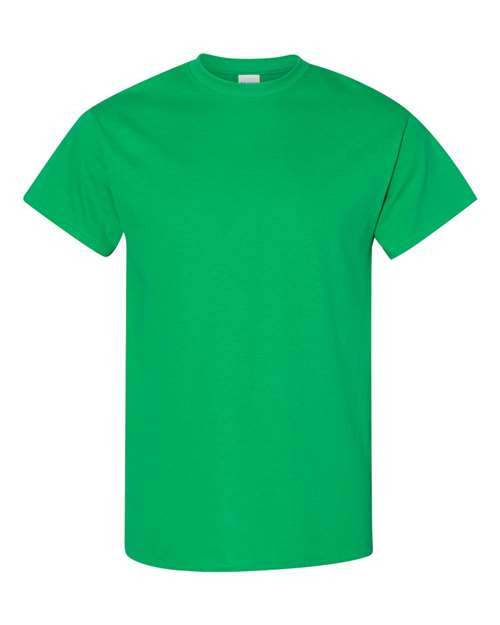
This is the part the fashion articles never mention. Printing on a dark garment usually requires a white underbase — an extra screen, extra flash-cure time, and extra ink — before your design colors go down. In practice:
- White and light garments: no underbase. A 3-color design needs 3 screens. Cheapest possible print.
- Black, navy, forest, maroon: add a white underbase. That same 3-color design now needs 4 screens plus a flash between stations — figure roughly $0.50–$1.00 more per shirt on typical run sizes.
- Garment-dyed midtones: the wildcard. Some designs sit fine without an underbase and get a pleasant lived-in look; punchy brand colors still need one. Test print before you quote.
- DTG and DTF: dark garments consume significantly more white ink, and DTG requires pretreatment on darks. Cost per print on black can run close to double the cost on white.
Practical takeaway: when a customer is flexible on color, steer multi-color designs toward light garments and single-color designs toward darks. Same design, meaningfully better margin. If you run a shop, our screen printer program and bulk pricing tiers are built around exactly this kind of job-by-job ordering.
Where to buy
Every color mentioned in this guide is in stock at B2B Sportswear: the full Gildan 5000 range, the BELLA+CANVAS 3001 pastels, and the Comfort Colors 1717 earth tones. No minimums, no annual fee, plain unbranded packaging on every shipment, and tax-exempt checkout if you hold a resale certificate. Check bulk pricing to see all six quantity breaks before you order.
FAQ
What is the best selling t-shirt color?
Black, by a wide margin, followed by white and navy. Across the wholesale channel these three plus heather grey account for roughly two-thirds of all blank tee volume. Trend colors move fast in retail but rarely displace the core in bulk ordering.
Are Comfort Colors still trending in 2026?
Yes. Garment-dyed earth tones remain the strongest growth category in blanks, and the Comfort Colors 1717 is the reference style. Demand is strongest from boutique brands, churches, camps, and hospitality merch, where the washed-down look supports a higher retail price.
Why do dark t-shirts cost more to print?
Dark garments need a white underbase layer so the design colors stay vibrant. That means an extra screen, extra ink, and a flash cure — typically adding around $0.50–$1.00 per shirt in screen printing, and roughly double the ink cost in DTG.
How many colors should I stock as a new print shop?
Start with four: black, white, navy, and athletic heather in your main blank. Order trend colors only against confirmed jobs. With same-day dispatch and free shipping at $265+ (contiguous 48 states), there’s no need to warehouse colors you might never sell.