


For twenty years, choosing a blank meant choosing a decoration method. Screen printing wanted ring-spun cotton. Sublimation demanded white polyester. DTG punished anything under 100% cotton. Then direct-to-film transfers showed up and quietly deleted most of those rules — a DTF transfer bonds to cotton, polyester, blends, nylon, even canvas, with the same file and nearly the same press cycle.
That changes which blanks are worth buying. This guide covers how DTF actually adheres, press settings by fabric, and the specific cheap blanks that suddenly punch far above their price when you decorate them with DTF.
How DTF works — and why it’s fabric-agnostic
A DTF transfer is printed in reverse on a PET film: CMYK ink first, then a full white underbase, then a hot-melt polyurethane adhesive powder that is baked onto the wet ink. When you press the film onto a garment, the adhesive melts into the fibers and the ink layer rides on top of it.
Here is the key point: the ink never touches the fabric. Screen printing and DTG both rely on ink chemically bonding with the fiber, which is why fiber content dictates everything. DTF only asks the adhesive to grab the surface — and hot-melt polyurethane grabs cotton, polyester, and blends about equally well. The fabric’s color doesn’t matter either, because the white underbase is built into every transfer.
Press settings by fabric
Fabric-agnostic doesn’t mean settings-agnostic. Heat tolerance differs, and polyester is where careless pressing shows up as scorch marks and dye migration. Baseline settings that work across most transfer suppliers:
| Fabric | Temperature | Time | Notes |
|---|---|---|---|
| 100% cotton | 300–320°F | 10–15 sec | Most forgiving; medium-firm pressure |
| 50/50 blends | 285–300°F | 10–12 sec | Sweet spot of easy pressing and soft hand |
| 100% polyester | 270–285°F | 8–10 sec | Low temp avoids dye migration and heat-press shine |
The DTF press cycle
On bright poly, every extra second above 280°F invites dye migration into the transfer.
Two universal rules regardless of fabric: do a cold peel unless your film is explicitly hot-peel (let the film cool fully before lifting), and always second-press for 5–10 seconds with a parchment or matte finishing sheet after peeling. The second press drives the adhesive deeper, kills the plastic sheen, and is the single biggest factor in wash durability.
On dark polyester, watch for dye migration — sublimated or piece-dyed poly can gas red or navy dye up through the white underbase a day after pressing. Staying at or below 285°F prevents most of it; a transfer with a blocker underbase handles the rest.
Cheap blanks that suddenly print great with DTF
This is DTF’s real business impact. Blanks that screen printers avoided for surface or fiber reasons are now perfectly viable — and they are the cheapest shirts in the catalog.
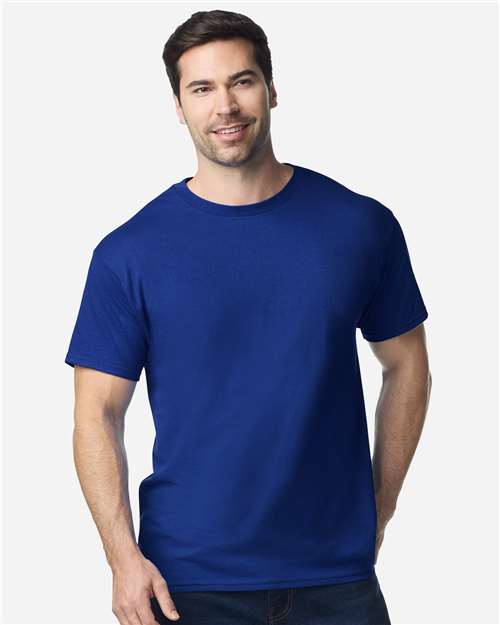
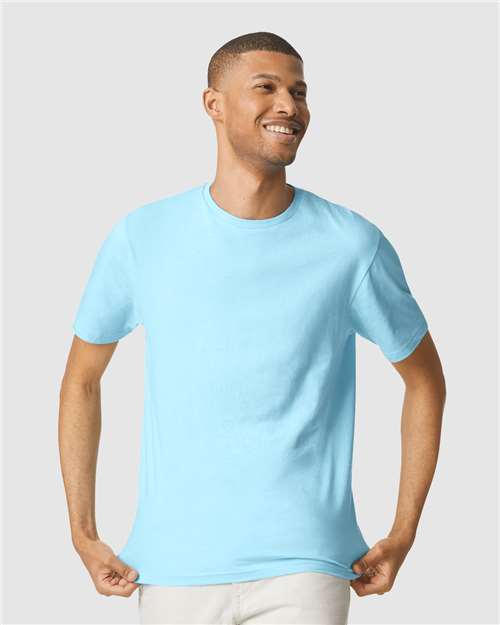
- Gildan 5000 Heavy Cotton — 5.3 oz open-end cotton. Under a squeegee, its grainy surface muddies halftones. Under a DTF transfer, none of that matters: the print sits on the adhesive layer, so a $3-ish shirt carries photo-quality full-color art. This is the highest-margin DTF blank, period.
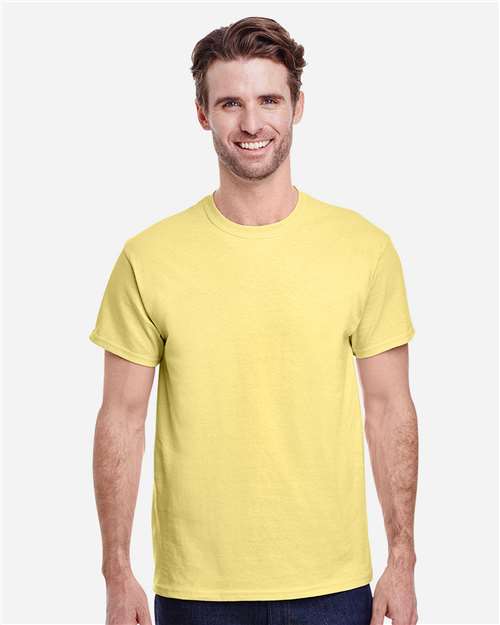
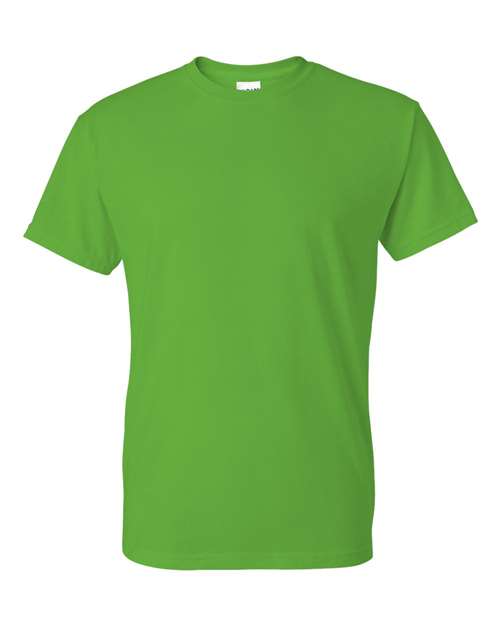
- Gildan 8000 DryBlend — 5.6 oz 50/50 cotton-poly. DTG shops skip it because poly content wrecks pretreatment; DTF doesn’t care. You get moisture wicking, less shrinkage, and better colorfastness than the 5000 for pennies more — ideal for team and event work.
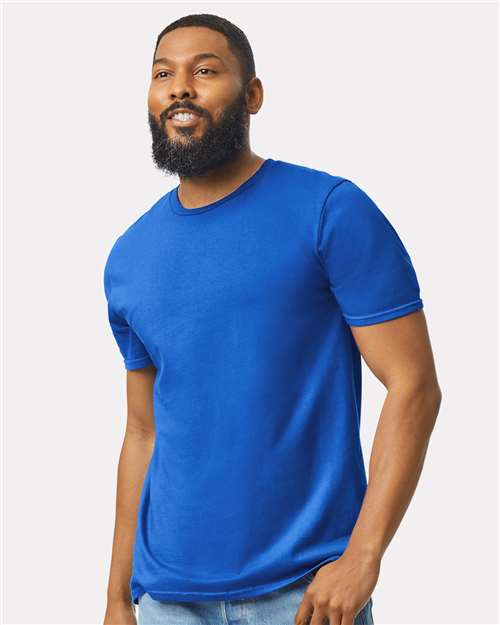
- Gildan 64000 Softstyle — when the customer wants a softer, retail-ish fit but the budget won’t stretch to premium blanks, Softstyle plus DTF reads far more expensive than it is.
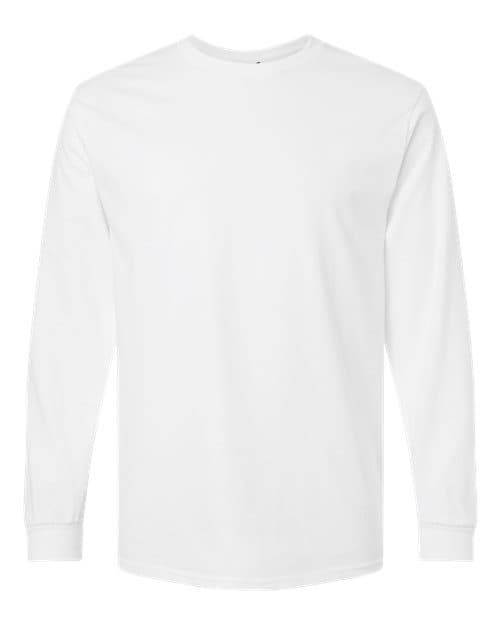
- Gildan 2400 long-sleeve — long-sleeves, hoodies, and other heavy pieces take DTF exactly like tees do. Same file, same settings, higher ticket.
One practical note on sourcing: DTF jobs are often small-batch and mixed — a dozen tees in four sizes, two hoodies, one long-sleeve. We built B2B Sportswear for exactly that workflow: 200,000+ SKUs across 100+ brands, true wholesale pricing from the first piece with no minimums and no annual fee, and six quantity-break tiers applied automatically in the cart. Mixing sizes and colors within a style still counts toward the break, orders placed by 1 PM EST ship same-day from the closest of our 12 US warehouses, and Ground shipping is free at $265+.
Durability: what to promise customers
A properly pressed and second-pressed DTF transfer survives 50+ home wash cycles before visible cracking or edge lift — roughly on par with plastisol screen printing and better than most DTG on blends. Set expectations honestly:
- Wash inside-out in cold or warm water; tumble dry low. High-heat drying is what ages a transfer fastest.
- The hand is slightly heavier than water-based screen printing or DTG. Large solid-fill designs feel like a thin athletic transfer. Halftone or distressed designs breathe better and feel softer.
- Failures almost always trace back to pressing, not the film: too little pressure, peeling too hot, or skipping the second press.
Where to buy DTF blanks wholesale
Every blank in this guide is in stock at B2B Sportswear’s t-shirt catalog, from the Gildan 5000 to the 8000 DryBlend, with automatic quantity breaks detailed on our bulk pricing page. Screen printers adding a DTF station should also bookmark our screen printer resources. Tax-exempt checkout with a resale certificate, plain unbranded packaging, same-day dispatch by 1 PM EST — order a mixed sample box and run your own wash tests.
FAQ
What are the best shirts for DTF transfers?
Almost any shirt works, so buy for margin and fit rather than fiber: the Gildan 5000 for budget jobs, the Gildan 8000 DryBlend when the customer wants wicking or better colorfastness, and a Softstyle 64000 for a retail feel. DTF’s adhesive bonds to cotton, polyester, and blends equally well.
Does DTF work better on cotton or polyester?
Adhesion is essentially equal; the difference is press handling. Cotton tolerates 300–320°F and is very forgiving, while polyester should be pressed at 270–285°F to avoid scorch marks and dye migration through the white underbase. On dark sublimation-dyed poly, use a transfer with a blocker layer.
What temperature do you press DTF transfers on blanks?
As a baseline: 300–320°F for 10–15 seconds on cotton, 285–300°F for blends, and 270–285°F for 8–10 seconds on polyester, with medium-firm pressure. Cold peel unless your film is hot-peel, then second-press for 5–10 seconds with a finishing sheet for durability and a matte finish.
How many washes does a DTF print last?
A correctly pressed DTF transfer typically lasts 50+ home washes before noticeable wear, comparable to plastisol screen printing. Washing inside-out in cold water and drying on low extends that considerably. Most early failures come from peeling the film too hot or skipping the second press, not from the transfer itself.