



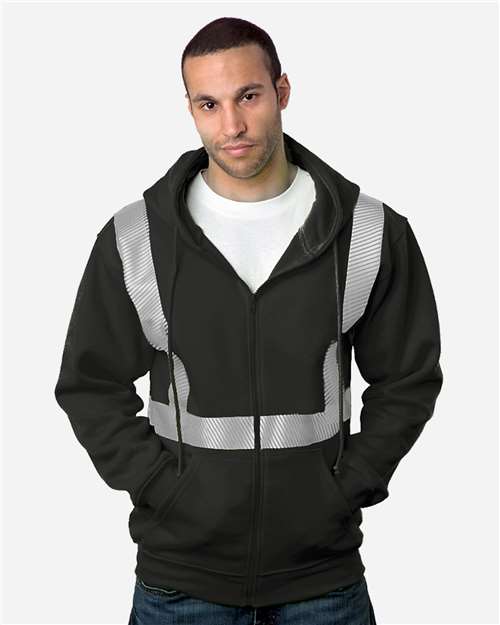
Hi-vis is the most underrated category in wholesale blanks. A boutique merch client orders once and disappears; a construction contractor with 40 field workers reorders every spring and every fall, forever, because OSHA and their general contractor require it. If you run a print or embroidery shop and you’re not quoting safety apparel, you’re leaving the stickiest revenue in the industry on the table.
The catch: hi-vis is regulated garment territory. The ANSI/ISEA 107 standard dictates how much fluorescent background material and how much reflective tape a garment needs, and a careless print job can technically void the rating. This guide covers what the classes actually mean, when segmented tape matters, and how to decorate hi-vis without creating a compliance problem for your customer.
ANSI/ISEA 107, explained in plain English
ANSI/ISEA 107 is the American standard for high-visibility safety apparel. It grades garments by two things: the area of fluorescent background fabric (that safety green or safety orange) and the area and placement of retroreflective tape. The grade determines where a worker is allowed to wear it.
- Type O / Class 1 — minimal coverage. Off-road use only: warehouses, parking attendants, oil fields. Rarely what a jobsite buyer actually needs.
- Type R / Class 2 — the workhorse. At least 775 in² of background material and 201 in² of reflective tape. Required for workers near roadways with traffic under 50 mph: surveyors, utility crews, airport ground staff, most construction.
- Type R / Class 3 — maximum visibility. At least 1,240 in² of background and 310 in² of tape, and the garment must have sleeves — a vest alone can never be Class 3. Required near high-speed traffic, in poor weather, and on night highway work.
The practical takeaway for a bulk buyer: Class 2 covers most crews; Class 3 is for highway and night work. When a customer doesn’t know which they need, ask one question: “Does anyone on your crew work next to traffic moving faster than 50 mph, or at night?” If yes, quote Class 3. If unsure, quote Class 3 anyway — the upcharge is small and nobody ever got in trouble for too much visibility.
| Rating | Background material | Reflective tape | Typical wearer |
|---|---|---|---|
| Class 1 | 217 in² | 155 in² | Warehouse, parking |
| Class 2 | 775 in² | 201 in² | Construction, utility, surveying |
| Class 3 | 1,240 in² | 310 in² + sleeves | Highway, night, emergency response |
ANSI class minimum background material
Class is set by visible background material and tape — printing over either can void the rating.
Segmented tape vs. solid tape: when it matters
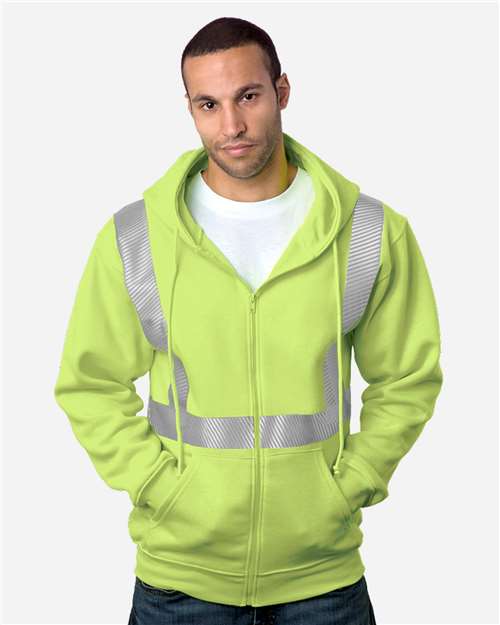
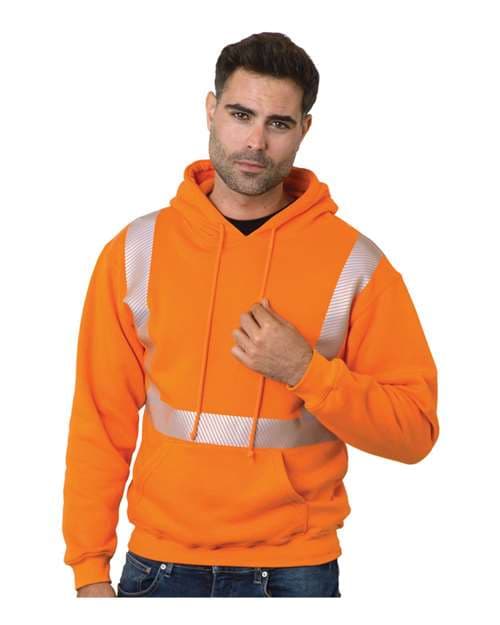
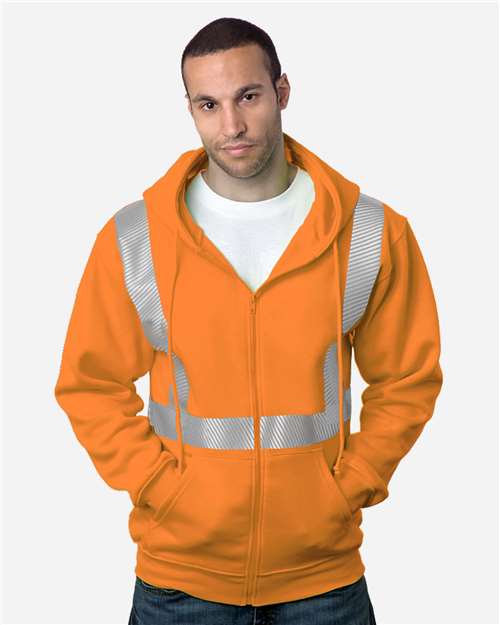
Older hi-vis garments use solid 2” reflective stripes. They work, but on a sweatshirt or tee the stiff tape restricts movement, traps heat, and cracks after repeated industrial washing. Segmented tape — the broken, brick-pattern stripe you see on newer garments like the Bayside hi-vis line — delivers the same certified reflective area while letting the fabric stretch and breathe between segments.
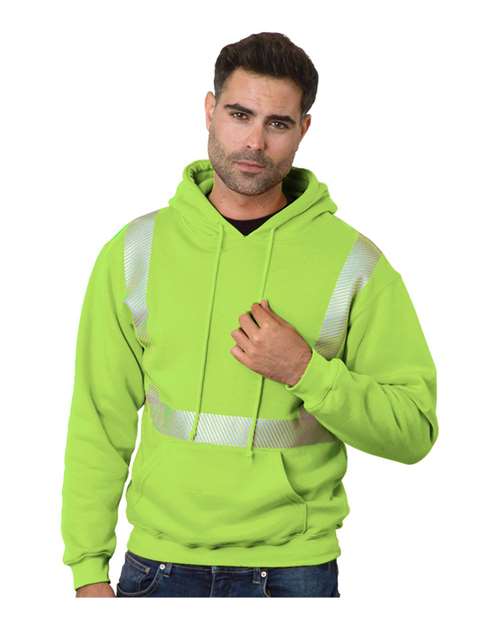
For crews who wear hi-vis all day (utility linemen, road crews in summer), segmented tape is a genuine comfort upgrade and worth mentioning on the quote. For occasional wear, it makes no practical difference. Either style counts toward the ANSI tape requirement as long as the finished garment is certified — which is why you buy garments that ship with the rating rather than trying to add tape yourself.
Printing and embroidering hi-vis without killing compliance
Here is the part that separates shops that win safety contracts from shops that lose them. ANSI ratings are based on visible background material and tape area. Decoration reduces the visible fluorescent area, so the rule of thumb used across the industry is:
- Keep total decoration under roughly 72 in² on a Class 2 garment — a standard left-chest logo (about 16 in²) plus a modest back print stays comfortably inside that.
- Never print over or within 2” of the reflective tape. Covering tape directly reduces the certified reflective area — that is the fastest way to void a rating.
- Use dark ink, not white. Black or navy logos read clearly against safety green and don’t create glare confusion at night.
- For embroidery, keep stitch counts modest and place designs on the left chest. Dense fill embroidery on polyester hi-vis fabric can pucker; a 3”–4” logo runs clean.
- Watch your platen heat on 100% polyester.Fluorescent poly dye migrates aggressively — cure plastisol low and slow or use a poly-blocking underbase, or your black logo turns swampy green in three days.
Put a line on every safety-apparel quote: “Decoration placed to preserve ANSI rating.” Contractors notice, and it costs you nothing.
How construction and utility buyers actually order
Safety apparel buyers behave differently from merch buyers, and your quoting should match:
- They order twice a year, in bulk. Spring (tees and short-sleeve) and fall (hoodies and long-sleeve). Get on their calendar in March and September.
- Sizes skew large. Order curves for field crews run heavy on L–3XL. A typical 24-piece curve is 2 M / 6 L / 8 XL / 6 2XL / 2 3XL — almost the inverse of a retail merch curve.
- They replace, not collect. Hi-vis fades — once the fluorescence dulls, the garment is no longer compliant and gets replaced. That fade cycle is your built-in reorder engine.
- They care about the packing slip, not the brand.Deliver on time, in plain packaging, with the sizes right, and you keep the account for a decade.
When you’re sourcing blanks for these jobs, buy from a supplier built for repeat bulk orders. We stock the full Bayside hi-vis line alongside 200,000+ SKUs from 100+ brands at B2B Sportswear, with true wholesale pricing from the first piece and six quantity breaks applied automatically in the cart — and you can mix sizes within a style to hit the breaks, which matters when your curve runs 2XL-heavy. Orders placed by 1 PM EST dispatch same day from the closest of our US warehouses, so a Monday reorder is on the jobsite by midweek.
Building a hi-vis program for a client
The winning pitch to a contractor is a two-garment program: a Class 2 or Class 3 tee for warm months and a hi-vis hoodie like the Bayside 3737B full-zip for cold months, both with the same left-chest logo. Quote it as an annual package with two delivery dates. You lock in two orders with one signature, and the client stops shopping around because their crew’s whole kit comes from one place.
If you decorate, our screen printer program and embroiderer program cover the workflow details, and tax-exempt checkout with a resale certificate keeps sales tax off your blanks.
Where to buy hi-vis blanks wholesale
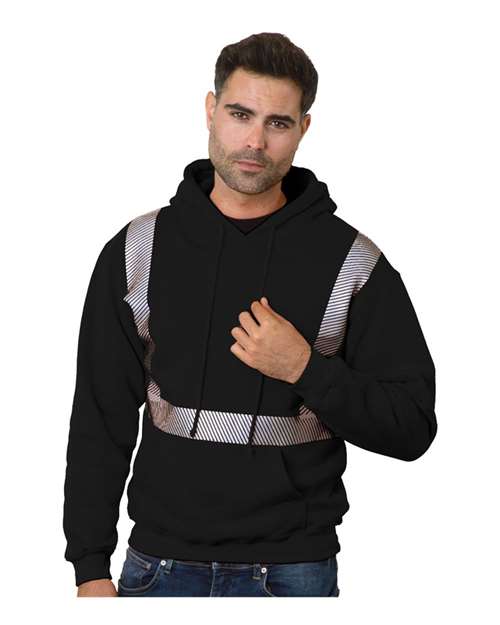
Browse the hoodies and sweatshirts category for cold-weather hi-vis, check bulk pricing tiers before you quote, and start with the Bayside 3739B hooded sweatshirt. No minimums, no annual fee, free Ground shipping on orders over $265 (contiguous 48 states) — which a single crew order clears easily.
FAQ
What is the difference between ANSI Class 2 and Class 3?
Class 2 requires at least 775 in² of fluorescent background material and 201 in² of reflective tape, and covers most construction and utility work near traffic under 50 mph. Class 3 requires 1,240 in² of background, 310 in² of tape, and sleeves — it’s mandatory for high-speed roadway, night, and low-visibility work.
Can you screen print on hi-vis shirts without voiding the ANSI rating?
Yes, if you keep decoration modest and away from the tape. Keep total print area under roughly 72 in² on a Class 2 garment, never print over or immediately next to reflective stripes, and use dark inks. A standard left-chest logo plus a small back print is safe.
Why does hi-vis clothing need to be replaced regularly?
Fluorescent dye degrades with UV exposure and washing. Once the background color visibly fades, the garment no longer meets the ANSI/ISEA 107 brightness requirement and should be replaced — typically after about six months of daily wear or 25–30 industrial washes.
Is a hi-vis vest ever Class 3?
No. Class 3 requires background material and tape on the arms, so the garment must have sleeves. A sleeveless vest tops out at Class 2 regardless of how much tape it carries.