


A company uniform polo gets treated worse than almost anything you embroider. It goes through a hundred or more washes, rides in work vans and rubs against tool belts, and the logo still has to look sharp on day 300. Uniform accounts reorder, and they reorder from whoever got the blank right the first time.
Short answer: for most uniform programs, embroider the Gildan 8800 DryBlend polo. Choose a pique such as the Harriton M200 for a more formal look, and a performance polo such as the CORE365 88181 for crews that work outside. The comparison below covers six blanks.
The best blank polos for embroidery, compared
| Polo | Fabric | Embroidery | Best for |
|---|---|---|---|
| Gildan 8800 DryBlend | 6 oz jersey, 52/48 ring-spun cotton/poly | Excellent; fine text holds | Trades, fleets, food service |
| Gildan 64800 Softstyle pique | 5.2 oz double pique, 100% ring-spun cotton | Good; keep logos bold | Retail, hospitality, budget pique |
| Harriton M200 | 5.9 oz pique, 100% ring-spun cotton | Good; keep logos bold | Front office, banks, clubs |
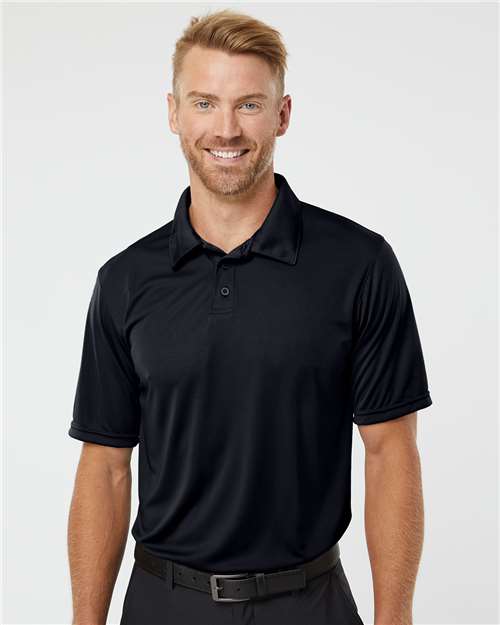
| CORE365 88181 Origin | 4.1 oz performance pique, 100% polyester | Good with no-show mesh backing | Outdoor crews, events, UPF needed |
| Augusta 5017 Vital | 4.5 oz wicking knit, 100% polyester | Good with no-show mesh backing | Gyms, landscaping, summer wear |
| Adidas A230 Performance | 3.8 oz, 100% recycled polyester | Light designs only; maker suggests heat transfer | Golf outings, client-facing sales teams |
Weights and fabrics are from each product’s spec sheet. More brands on the Gildan, Harriton, CORE365 and Augusta Sportswear brand pages.
Jersey, pique or performance: which polo holds embroidery best?
Jersey knit
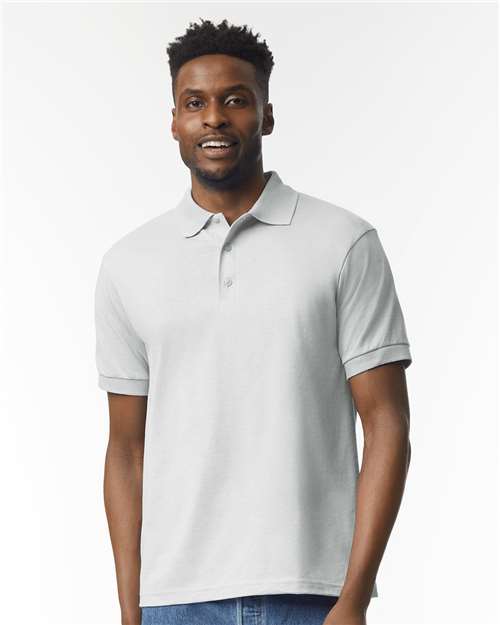
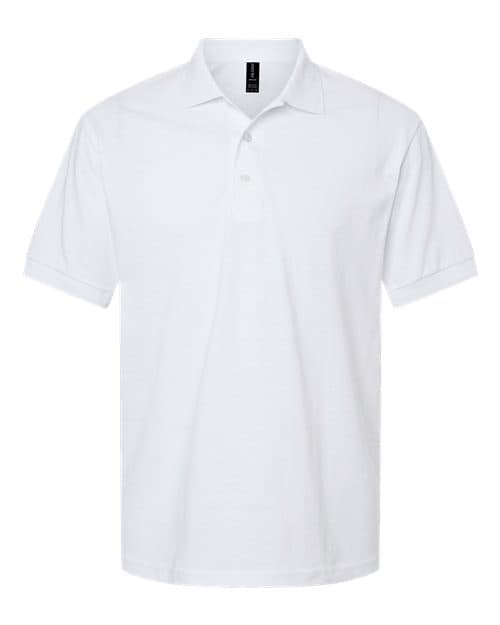
Jersey is the flat, smooth knit, the same construction as a t-shirt but heavier. It embroiders best because the surface is even, so small text and fine detail stay legible. The Gildan 8800 is the workhorse: 6 oz 52/48 cotton/poly with a moisture-wicking finish and a three-button placket.
Pique knit
Pique is the textured “waffle” polo fabric. It hides wrinkles and minor stains, which is why clubs and banks default to it. The texture also swallows lettering under about 0.25” tall, so pique wants bolder, chunkier digitizing.
Performance polyester
Polyester performance polos wick sweat, dry fast and resist fading. The trade-off is snagging and a slicker surface that can pucker under dense stitching if the backing is too light.
Which polo survives industrial laundry?
Uniform rental and industrial laundries wash at 140–160°F with strong detergents and high-heat drying. Three rules keep a program from fading into mismatched shirts by month six:
- Polyester holds dye better than cotton. Dark 100% cotton piques lighten visibly after many hot washes; blends split the difference.
- Buy the whole program at once. One purchase of the full size run per color keeps dye lots matched.
- Avoid reds and royals around bleach. Kitchens and clinics using chlorinated sanitizers blotch cotton-rich colors; dark heathers and blacks in poly-rich fabrics last longest.
Which polos resist snagging on job sites?
Snags kill more uniform polos than fading does. Filament polyester catches on velcro, truck-bed liners and fences. For HVAC, electrical and landscaping crews, favor a blend like the Gildan 8800 over a shiny filament knit. If the customer insists on performance poly, set expectations: it is a comfort upgrade, not a durability upgrade.
A uniform program that reorders itself
- 1
Pick one style in two or three company colors
Consistency beats variety in uniforms
- 2
Embroider a 3.5″ left-chest logo
One digitized file serves every reorder
- 3
Size-run S–3XL with a 10% top-up buffer
- 4
Calendar a quarterly check-in
New hires arrive; polos fade; both are reorders
How to embroider a polo: backing, size and placement
- Cutaway stabilizer, always.Knits stretch, and tearaway lets the design distort after a few washes. Use 2.5–3 oz cutaway on jersey and pique, and a no-show poly mesh cutaway on lightweight performance fabric.
- Left-chest logos 3–4” wide.Center the design 7–9” down from the shoulder seam and 4–6” from center, roughly level with the bottom of the placket.
- Lower density on performance poly. Reduce fill density about 10% and add a light topping if the knit is unstable.
- Hoop the fabric, not the placket. A placket caught in the hoop guarantees a crooked logo.
More on decoration setup in the embroidery blanks guide and on the embroiderer resources page.
Where to buy blank polos wholesale
Every polo in this guide is in stock at B2B Sportswear’s polos category with no minimum order. Volume tiers apply automatically, and sizes and colors of one style count together toward the break, which matters when a client needs 2 smalls, 14 larges and 6 2XLs of the same polo (see bulk pricing). In-stock orders placed before 1 PM EST ship the same business day from the closest warehouse in plain, unbranded packaging, Ground shipping is free on larger orders within the contiguous 48 states (see shipping), and resellers can check out tax-exempt with a resale certificate. Order a sample size run of two candidates, wash them ten times, and let the fabric decide.
FAQ
What is the best blank polo for embroidery?
For most company uniforms, the Gildan 8800 DryBlend polo: a smooth 6 oz jersey knit that holds small lettering, resists fading in hot washes, and is one of the lowest-cost polos you can embroider. For a classic pique look, the Harriton M200 or the Gildan 64800 Softstyle pique.
Pique or jersey: which polo is better for embroidered logos?
Jersey holds fine detail and text under about a quarter inch better, because its surface is flat. Pique hides wrinkles and looks more formal, but its texture swallows very small lettering, so digitize logos bolder for pique.
Should company uniform polos be cotton or polyester?
A cotton/poly blend suits most uniform programs: it fades less than cotton in hot industrial washes and snags less than filament polyester. Choose 100% polyester performance polos for crews working outdoors in heat, and 100% cotton pique for front-office roles with gentle laundering.
How many polos should I order per employee?
Three per employee for a weekly-wash rotation, five for daily-wear roles such as food service. Add 5 to 10 percent in the middle sizes for new hires and replacements, and order the whole program at once so dye lots match.
Where can I buy blank polos wholesale with no minimum?
B2B Sportswear sells blank polos from the first piece with no minimum order. Volume tiers apply automatically, sizes and colors of one style count together, in-stock orders placed before 1 PM EST ship the same business day, and Ground shipping is free on larger orders within the contiguous 48 states.