



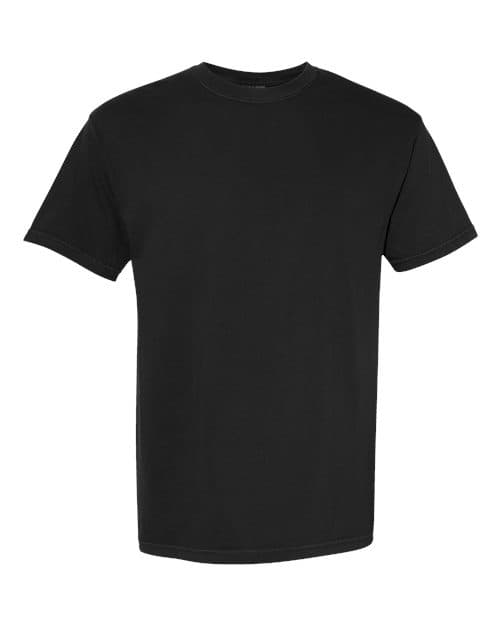
If a customer walks into a print shop in 2026 and asks for “that vintage-looking thick tee,” they mean the Comfort Colors 1717. It has quietly become the default premium blank for coffee shops, breweries, event brands, and every boutique that wants merch to feel like a shirt someone already loved for five years. This review covers what the 1717 actually is, the garment-dye quirks that surprise first-time buyers, and how to print it without headaches.
What you’re getting
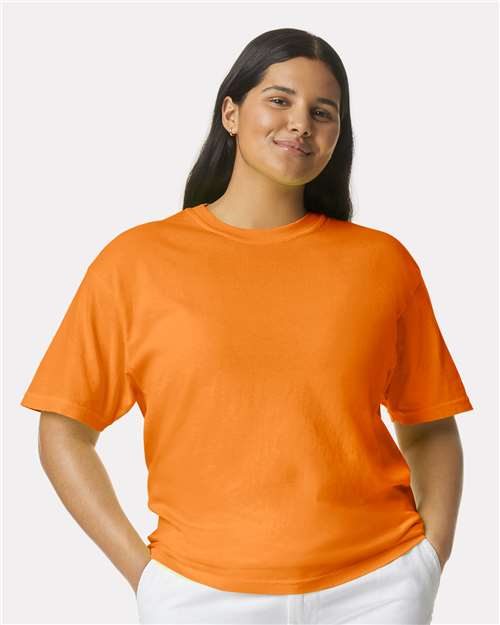
The 1717 is a 6.1 oz, 100% US-grown ring-spun cotton tee — genuinely heavyweight in an era of 4.2 oz fashion blanks. The construction is old-school on purpose: relaxed fit, wide double-needle collar, and a boxy drape that reads “vintage” rather than “athletic.” Wholesale cost runs around $5–$6, roughly double a Gildan 5000 and a touch above a BELLA+CANVAS 3001.
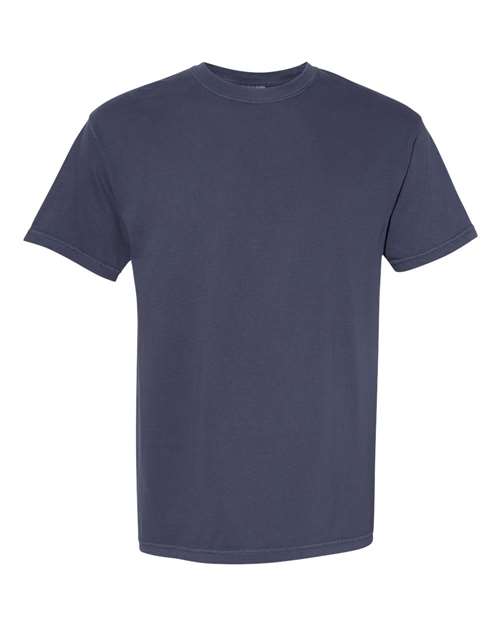
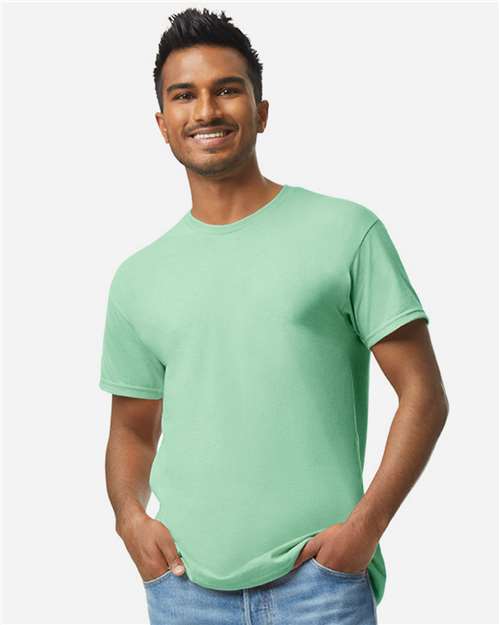
The headline feature is garment dyeing: the shirt is sewn first from undyed fabric, then the finished garment is pigment-dyed and washed. That’s what produces the soft, broken-in hand and those muted, slightly-faded shades — Seafoam, Ivory, Butter, Blue Jean, Crimson — that conventional piece-dyed shirts can’t match.
The garment-dye quirks nobody warns you about
Lot-to-lot color variation
Because each dye lot is a separate bath of finished garments, the same color code can shift subtly between production runs. A “Blue Jean” reorder six months later may sit a shade lighter or greener than the first batch. This is inherent to the process, not a defect. Two rules keep it from becoming a customer dispute: order the full job quantity in one purchase whenever possible, and tell retail clients up front that garment-dyed reorders are “matching, not identical.”
Shrinkage and sizing
The 1717 is dyed and washed after sewing, so most shrinkage has already happened at the factory — expect only minimal further shrinkage in a home wash. But the cut is generously relaxed: a size M wears close to what many fashion blanks call L. Slim-fit customers should size down; everyone else orders true to size and gets the intended boxy vintage drape. Put the size chart on the quote — this shirt fits nothing like a 3001.
Pigment dye keeps fading — gracefully
Pigment dye sits on the fiber surface rather than penetrating it, so the shirt continues to fade slowly at seams and high-wear points over years of washing. That’s the aesthetic. It also means the very first wash can shed a little pigment — tell end-users to wash cold, inside out, and separately the first time.
Printing on the 1717
Good news first: 100% ring-spun cotton with a flat, washed surface is a pleasant canvas. The specifics:
- Plastisol works exactly as expected, and there is no polyester so dye migration is a non-issue. A soft-hand additive keeps the print from fighting the shirt’s broken-in feel.
- Water-based ink is the natural aesthetic match — it sinks into the cotton and ages with the garment. Colors shift slightly on top of pigment-dyed shades, so always strike a test print on the actual shirt color.
- Discharge is unreliable here. Pigment dyes don’t discharge the way reactive dyes do; results range from faint to nothing. Use an underbase or water-based opaque instead of counting on discharge.
- Keep art minimal. A one- or two-color chest hit or a small left-chest mark suits the vintage look and is what the shirt’s buyers actually want. A giant 8-color photoreal front print on a 1717 is a category error.
Who buys it, and the margin story
The 1717 customer is a brand, not a fun run: coffee roasters, breweries, surf and outdoor labels, wedding and event merch, churches, and boutiques. These buyers happily retail a printed 1717 at $25–$35 — the blank’s around $5–$6 cost supports a wider absolute margin than any basic tee. Quote it as the premium tier next to a Gildan 5000 budget option and let the customer talk themselves into it.
The colors that actually sell
| Color family | Examples | Who orders it |
|---|---|---|
| Washed neutrals | Ivory, Butter, Sandstone | Coffee shops, wedding merch, boutiques |
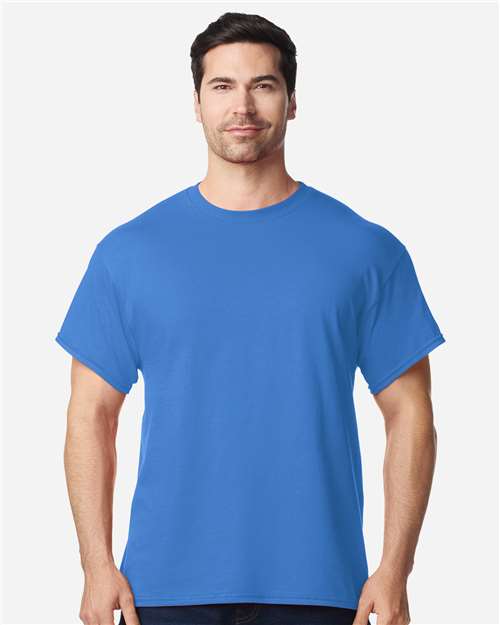
| Faded blues | Blue Jean, Ice Blue, Flo Blue | Breweries, coastal and outdoor brands |
| Muted greens | Seafoam, Light Green, Moss | Event brands, plant shops, festivals |
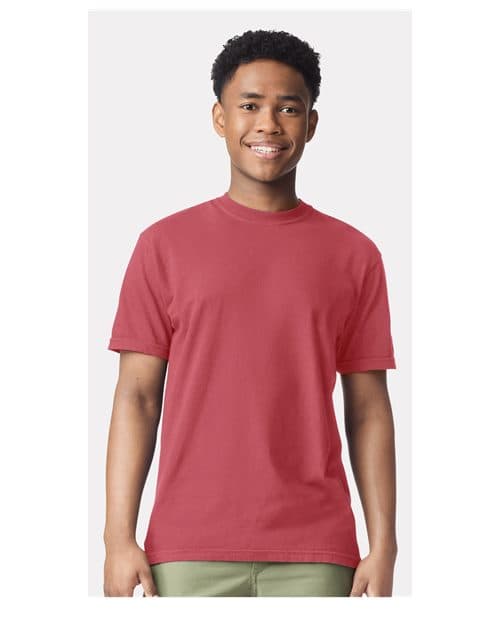
| Deep tones | Pepper, Graphite, Crimson | Year-round staples, restaurant merch |
The 1717 economics, per shirt
Typical boutique retail: $30.00
Your margin$17.00
Blank (qty-1)$8.55
One-color print$4.45
Garment-dyed color does the design work — a one-color print on the right shade looks finished.
Stocking tip: the washed pastels spike hard from March through September; Pepper and Graphite carry the winter. If a client is picking one colorway for a first run, Blue Jean is the statistically safe answer.
Verdict
The Comfort Colors 1717 earns its price. It is the only mainstream blank that delivers the garment-dyed vintage look at wholesale scale, it prints cleanly if you respect the pigment-dye rules above, and its buyers are the least price-sensitive customers a print shop has. Know the two real caveats — dye-lot variation on reorders and the oversized relaxed cut — and it’s a five-star stock item.
Where to buy
The Comfort Colors 1717 is stocked in the full color range at B2B Sportswear at true wholesale pricing — no minimums, six quantity-break tiers applied automatically, and sizes/colors mix within the style so a 48-piece job hits the 48-piece tier. Order by 1 PM EST for same-day dispatch from the closest US warehouse, with free Ground shipping at $265+. Browse the rest of the t-shirt catalog, check bulk pricing tiers, and set up tax-exempt checkout with your resale certificate before the first order.
FAQ
Does the Comfort Colors 1717 shrink?
Very little. The 1717 is garment-dyed and washed after sewing, so most shrinkage happens at the factory. Expect minimal additional shrinkage in a normal cold wash — the bigger sizing note is the relaxed, boxy cut, which wears about a size roomier than fashion blanks.
Is Comfort Colors 1717 good for screen printing?
Yes. It’s 100% ring-spun cotton, so plastisol and water-based inks print cleanly with no dye migration. The one exception is discharge ink, which reacts poorly with pigment dyes — use an underbase or opaque water-based system on dark shades instead.
Why do Comfort Colors reorders look slightly different?
Each production run is dyed in a separate bath, so the same color code can vary subtly between lots. Order the full job quantity at once when color consistency matters, and set reorder expectations with retail clients in advance.
How much does the Comfort Colors 1717 cost wholesale?
Around $5–$6 per piece at wholesale, varying by color and quantity tier — roughly double a budget tee, but it supports a $25–$35 printed retail price, giving it the best absolute margin of any mainstream t-shirt blank.