



Ask a supplier for one t-shirt and you pay one price. Ask for forty-eight of the same style and the per-piece price quietly drops two or three times on the way there. That staircase is quantity-break pricing, and understanding it — where the breaks sit, why they exist, and how to land your order on the right side of one — is the difference between a print shop that guesses at margins and one that engineers them.
How quantity-break pricing works
A quantity break (or price break) is a threshold at which the per-piece price steps down. Instead of a smooth curve, wholesale pricing moves in tiers: everything from piece 1 to the first threshold costs one rate, everything past it costs a lower rate, and so on. Two details matter more than the tier boundaries themselves:
- Whether the discount applies to the whole line. At most serious wholesalers — including us — hitting a tier reprices every piece of that style in the cart, not just the pieces above the threshold.
- What counts toward the threshold. The generous version counts every unit of a style regardless of size or color; the stingy version counts each SKU separately, so 12 black larges and 12 navy mediums never combine. Always check this before comparing supplier prices.
Why per-piece cost actually drops
Quantity breaks are not charity; they mirror real costs downstream.
- Case efficiency. Blank tees ship from mills in cases — commonly 36–72 pieces per case depending on style and size. A warehouse picker grabbing a full sealed case spends a fraction of the labor of picking 5 loose units from 5 shelf locations. Larger orders align with case quantities, and the labor saving is passed through.
- Freight density. Shipping cost per shirt collapses as boxes fill. A single tee travels in mostly-empty packaging; 48 tees pack into one dense carton where the per-piece freight cost drops to pennies. Carriers price by weight and dimensional volume, so a full box is dramatically cheaper per unit.
- Fixed order costs. Picking, packing, label, invoice, customer service — roughly the same whether the box holds 6 shirts or 60. Spread over more units, the overhead per shirt shrinks.
B2B Sportswear’s six automatic tiers
At B2B Sportswear every style has six quantity-break tiers, applied automatically in the cart — no coupon codes, no sales rep, no negotiation:
| Tier | Quantity (per style) | What it means |
|---|---|---|
| 1 | 1–5 | True wholesale from the very first piece |
| 2 | 6–11 | Small sample and top-up orders |
| 3 | 12–23 | The classic dozen — most small print jobs |
| 4 | 24–47 | Team and event territory |
| 5 | 48–99 | Case-adjacent pricing for production runs |
| 6 | 100+ | Best rate — contract and uniform programs |
Six quantity-break tiers, applied automatically
list
1–5 pcs
↓
6–11
↓↓
12–23
↓↓
24–47
↓↓
48–99
best
100+
Mixing sizes and colors within a style still counts toward the break — 36 shirts across three colors price as 36.
The part that matters most for real orders: tiers count every unit of a style, mix-and-match across sizes and colors. A real 48-piece order is never 48 identical shirts — it is 6 smalls, 18 mediums, 16 larges, and 8 XLs across two colors. All 48 count toward Tier 5, and all 48 get Tier 5 pricing. Full details are on the bulk pricing page.
Worked example: the margin on a 48-piece job
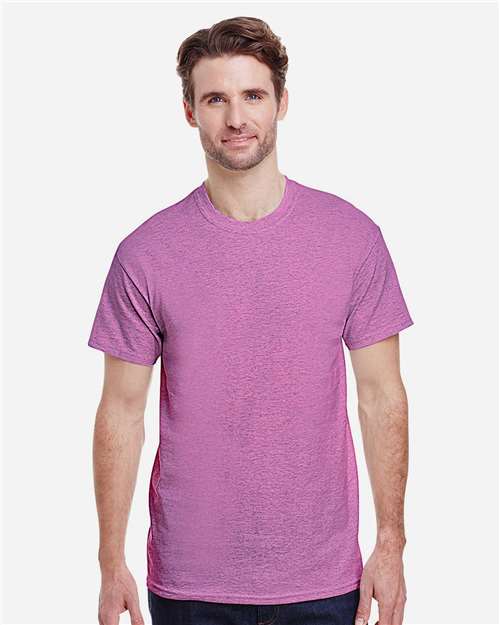
Say a customer orders 48 printed event tees on a Gildan 5000 at $10 per shirt, one-color front print. Approximate numbers:
- Blanks: around $3 wholesale at the 48–99 tier × 48 = roughly $145 — under the $265 free-Ground threshold, so either budget Ground freight or top the cart up with the styles you were going to reorder anyway and ship free.
- Printing: screens, ink, and labor at roughly $2.50/shirt for a one-color run = about $120.
- Revenue: 48 × $10 = $480.
- Gross profit: $480 − $145 − $120 ≈ $215 before freight, a margin around 45%.
Now watch what the tier boundary does. If that same customer had ordered 46 shirts, the blanks would price at the 24–47 tier — call it 30–40 cents more per piece — costing you roughly $15 in margin andpushing the cart further from the free-ship threshold. The move every experienced shop makes: when a quote lands just below a break, offer the customer the extra pieces at your marginal cost. “For $12 more I can make it 48” closes itself, and both of you come out ahead.
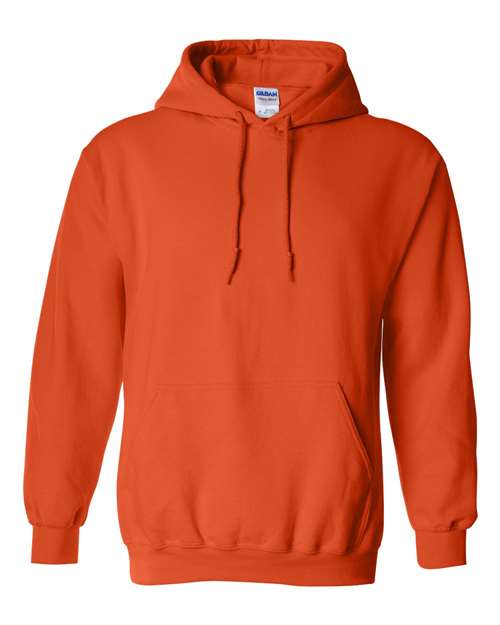
The same logic scales up: a 100-piece uniform program hits Tier 6, and pairing it with a heavier garment like the Gildan 18500 hoodie raises the ticket without adding decoration setups.
Where to buy bulk t-shirts with automatic price breaks
Every one of the 200,000+ SKUs across 100+ brands at B2B Sportswear carries the six automatic tiers above, with true wholesale pricing from the first piece, no minimums, and no annual fee. Orders placed by 1 PM EST ship same-day from our closest US warehouse in plain unbranded packaging, Ground shipping is free at $265+, and resellers check out tax-exempt with a resale certificate. Compare the tiers yourself on the bulk pricing page, and if you run a shop, the screen printer resources cover blank selection job by job.
FAQ
How does bulk t-shirt pricing work?
Wholesale t-shirt pricing steps down in quantity tiers: the more units of a style you order, the lower the per-piece price. At B2B Sportswear there are six automatic tiers — 1–5, 6–11, 12–23, 24–47, 48–99, and 100+ — and hitting a tier reprices every piece of that style in the cart.
Why are t-shirts cheaper in bulk?
Because the supplier’s real costs per shirt drop with volume: full-case picks take far less warehouse labor than loose units, densely packed cartons cut freight cost per piece to pennies, and fixed order-handling costs spread across more units. Quantity breaks pass those savings through rather than being an arbitrary discount.
Do mixed sizes and colors count toward a quantity discount?
At B2B Sportswear, yes — every unit of a style counts toward the break regardless of size or color, so 24 black and 24 navy shirts in assorted sizes all get the 48–99 tier price. Some suppliers count each size/color SKU separately, which makes their headline prices misleading for real mixed-size orders.
How many shirts do I need to order to get wholesale pricing?
One. B2B Sportswear charges true wholesale from the first piece with no minimum order and no membership fee; quantity tiers simply lower the price further as an order grows. Free Ground shipping starts at $265 (contiguous 48 states), which most multi-style restocks clear in a single cart.