


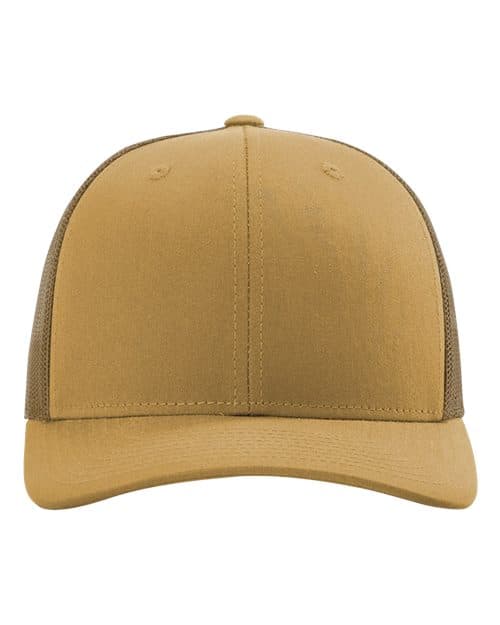
Hats are the highest-margin item most embroidery shops run — a blank that costs a few dollars wholesale routinely retails for $25–$30 with a left-panel logo. But hats are also where new embroiderers lose the most money, because the wrong blank puckers, sinks the stitch, or collapses in the hoop. The blank you choose matters as much as your digitizing.
This guide covers the construction details that actually change your stitch-out — crown structure, profile height, panel count — and the specific hats we see reordered again and again by working shops.
Structured vs unstructured crowns
A structured hat has a layer of buckram (a stiff fused backing) inside the front two panels. It holds its shape on the shelf and, more importantly, holds tension in the cap frame while the needle punches through. Structured crowns are the safe default for embroidery: designs sit flat, small text stays legible, and fill stitches don’t sink.
An unstructured hat (think classic “dad hat”) has no buckram — the front panels are soft and floppy. They look great worn, but they demand more from the operator: slower machine speeds, a firmer backing, and digitizing with more underlay to stabilize the fabric. If you’re quoting a 144-piece dad hat job on your first month with a cap driver, pad your production time.
- Structured: best for corporate logos, small text, dense fills, new operators.
- Unstructured: best for lifestyle brands and simple, bold designs — run slower and use crisp underlay.
Profile height and panel count
Profile is the height of the crown from brim to button. Mid profile (roughly 3.5”) is the modern standard and gives you the largest usable embroidery field — typically about 2.25” tall by 4–4.5” wide on the front. Low profile caps sit closer to the head and shrink that field; keep front designs under about 2” tall or the top of the logo curls over the crown seam. High-profile (“snapback era”) crowns give the most room but read as a specific streetwear look.
Panel count decides whether you have a seam running through the middle of your design. A 6-panel hat has a center seam directly in the front — fine for two-part logos or designs with a natural center gap, risky for a single centered wordmark, because the needle can deflect on the seam. A 5-panel hat (like most trucker caps) has one uninterrupted front panel: seam-free real estate, which is a big reason truckers dominate the embroidery market.
The default answer: Richardson 112
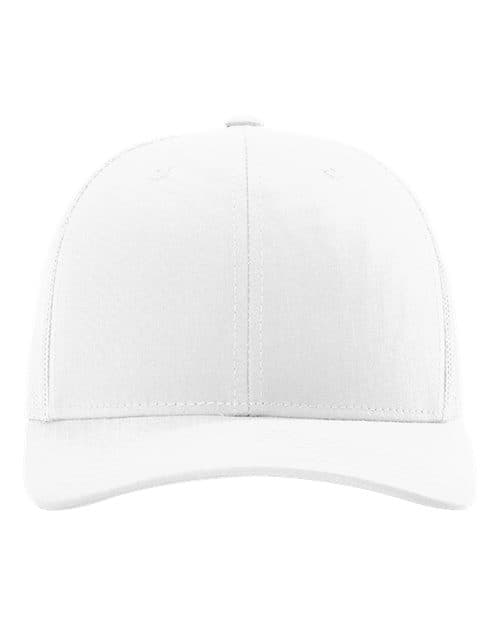
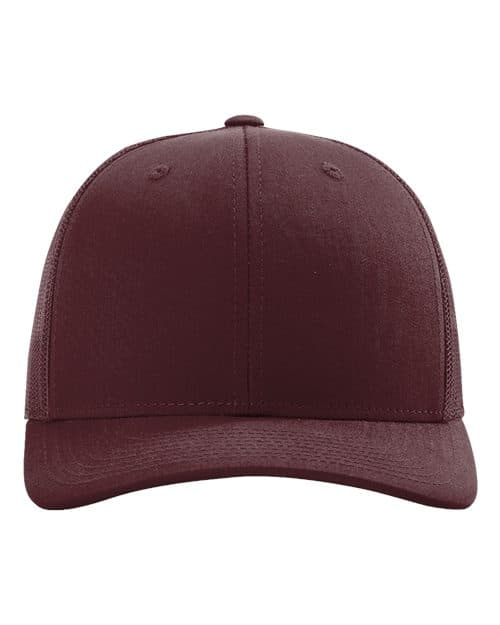
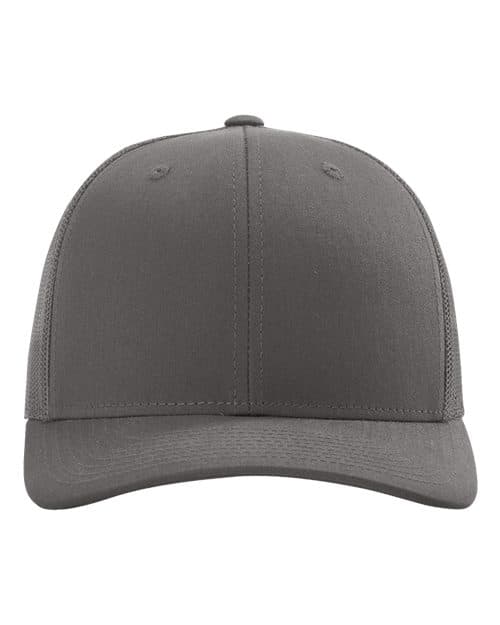
If you only stock one hat, stock the Richardson 112. It is the best-selling embroidery blank in the country for boring, practical reasons: a structured mid-profile front that hoops cleanly, a seam-free front panel, a snapback closure that fits nearly everyone, and a huge range of two-tone and tri-color combinations that make a one-color logo look like a designed product. Wholesale cost runs around $5–$6, and shops routinely retail it embroidered at $28–$32.
The 112 also solves a quoting problem: because it comes in so many stock colorways, you can offer a customer “your logo, five colorways” without changing thread colors — one design file, one setup, five SKUs for their store.
Comparison: the hats worth stocking
| Style | Construction | Best for | Embroidery difficulty |
|---|---|---|---|
| Richardson 112 trucker | Structured, mid profile, seam-free front | Everything — the universal default | Easy |
| Structured 6-panel twill | Structured, mid profile, center front seam | Corporate, uniforms, golf | Easy — avoid centering fine text on the seam |
| Unstructured dad hat | Soft crown, low profile | Lifestyle brands, minimal designs | Moderate — slow down, add underlay |
| Cuffed knit beanie | Stretch knit, embroider on the cuff | Winter reorders, Q4 merch | Moderate — flat hoop, stabilize the stretch |
Cap hooping that saves stitch-outs
- 1
Seat the sweatband under the frame clip
Most puckering starts with a loose sweatband
- 2
Digitize center-out
Fabric pushes to the sides instead of bunching
- 3
Slow to 600–650 SPM over seams and mesh
- 4
Keep designs ≤2.25″ tall on mid profiles
Under 2″ on low profiles
- 5
One firm tearaway — add a second on unstructured crowns
Hooping tips that save stitch-outs
- Seat the sweatband under the frame clip. Most cap puckering starts with a loose sweatband, not the digitizing.
- Run center-out. Digitize cap designs to sew from the center outward so fabric pushes toward the sides instead of bunching in the middle.
- Slow down on seams and mesh. Drop to roughly 600–650 SPM crossing a 6-panel center seam or stitching near trucker mesh.
- Keep designs 2.25” tall or less on mid profiles, under 2” on low profiles.
- Use one piece of firm tearaway backing on structured caps; add a second layer on unstructured crowns.
A practical note on sourcing: hats are exactly the product where a wholesale account with no minimums pays off. At B2B Sportswear you get true wholesale pricing from the first piece, six quantity-break tiers applied automatically in the cart, and you can mix colors within a style — order 12 black, 12 heather, and 12 navy Richardson 112s and all 36 count toward the same price break. Orders ship same day when placed by 1 PM EST from our closest US warehouse, in plain unbranded packaging you can reship straight to your customer.
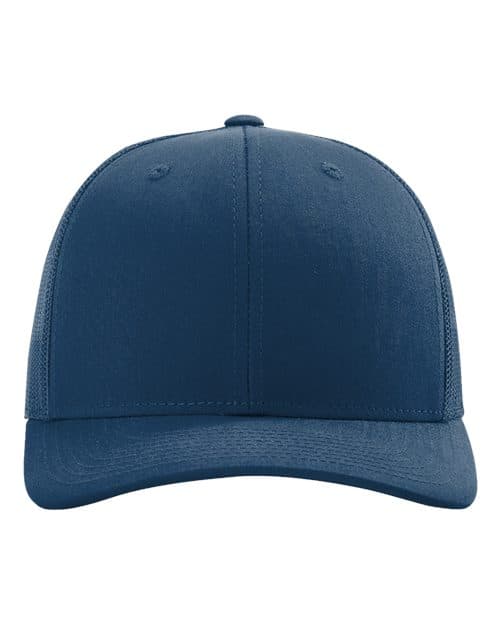
Don’t forget beanies for winter
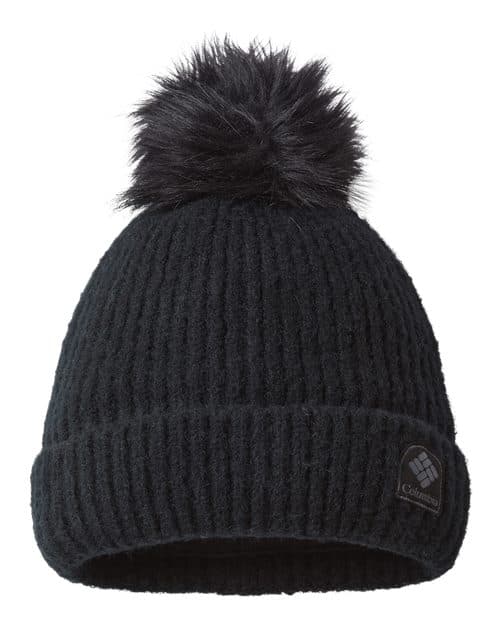
From October through January, beanies quietly outsell caps for a lot of shops. Embroider on the cuff (or use a sewn-on woven patch if the knit is chunky), keep designs under about 4” wide, and use a stabilizer that handles stretch. A retail-brand option like the Columbia pom-pom beanie lets you charge a genuine premium — a recognized outdoor label plus a custom logo is an easy $35 retail item for corporate holiday gifts.
Where to buy blank hats for embroidery
We stock the Richardson 112, retail-brand beanies, and hundreds of other cap styles across our hats & caps category — part of 200,000+ SKUs from 100+ brands, all at wholesale pricing with no minimums and no annual fee. Check bulk pricing to see the quantity breaks, and if you run an embroidery business, our embroiderers page covers tax-exempt checkout with a resale certificate and free Ground shipping on orders of $265 or more (contiguous 48 states).
FAQ
What is the best hat for embroidery?
The Richardson 112 trucker is the most popular blank hat for embroidery in the US. Its structured mid-profile crown hoops cleanly, the front panel is seam-free, and it comes in dozens of stock colorways, so one embroidery file works across an entire color range.
Are structured or unstructured hats better for embroidery?
Structured hats are easier and more forgiving — the buckram backing keeps the fabric stable under the needle. Unstructured dad hats can absolutely be embroidered, but they require slower machine speeds, firmer backing, and digitizing with more underlay to avoid puckering.
How big can an embroidery design be on a hat?
On a mid-profile cap, plan for a maximum of about 2.25” tall by 4–4.5” wide on the front. Low-profile caps should stay under about 2” tall. Side and back hits are usually 1.5”–2” wide.
Where can I buy wholesale hats for embroidery with no minimum?
B2B Sportswear sells blank hats at true wholesale pricing from the first piece, with no minimum order and no membership fee. Quantity breaks apply automatically in the cart, and orders placed by 1 PM EST ship the same day from the nearest US warehouse.