


Embroidery is the opposite of printing in one crucial way: instead of laying ink on top of fabric, you are punching 5,000–10,000 needle penetrations through it while thread tension tries to pull the whole thing toward the center of the design. Flimsy fabric loses that fight. It puckers, ripples, and distorts, and no digitizing file can fully rescue a blank that will not hold still in the hoop.
That is why experienced embroiderers pick blanks by stability first — weight, knit tightness, and structure — and everything else second. This guide covers the blanks that hoop best, the stabilizer to pair with each fabric, left-chest sizing standards, and the digitizing math that decides whether a job is profitable.
Fabric stability: why heavier garments hoop better
A stitch pulls. A satin column pulls hardest, a dense fill pulls constantly, and the sum of a left-chest logo is several pounds of cumulative thread tension. Heavier fabric — more ounces per square yard, tighter knit — resists that pull, keeps registration true, and lies flat when the hoop comes off. A 4.2 oz fashion tee does not; it ripples around the logo like a pond.
The practical ranking, best to hardest to embroider:
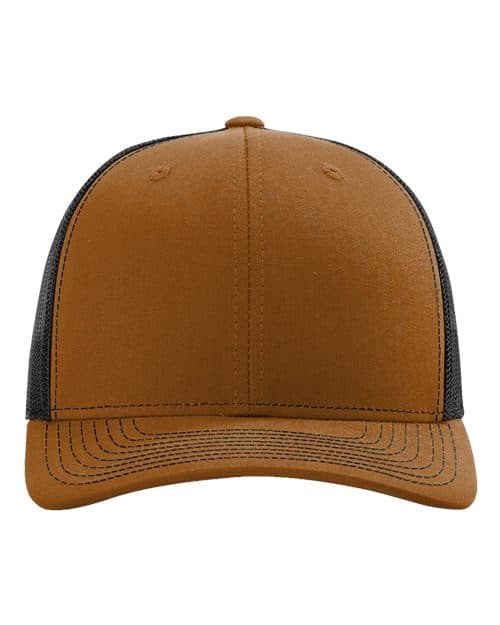
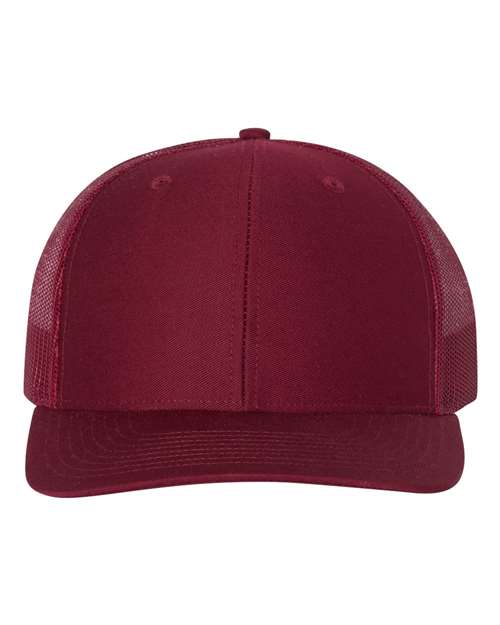
- Structured caps like the Richardson 112 trucker — buckram-backed front panels are practically a rigid canvas.
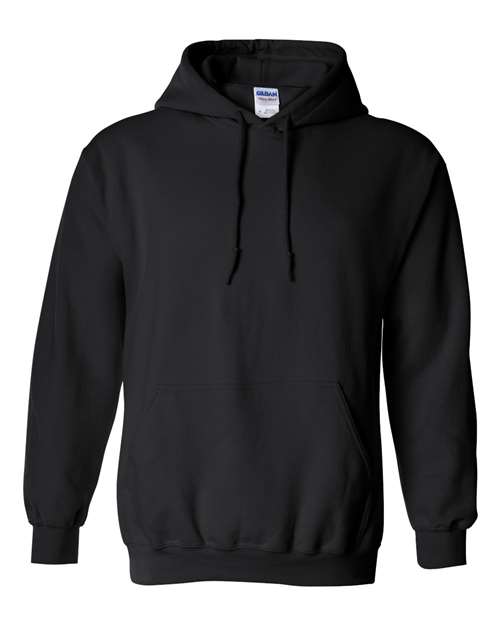
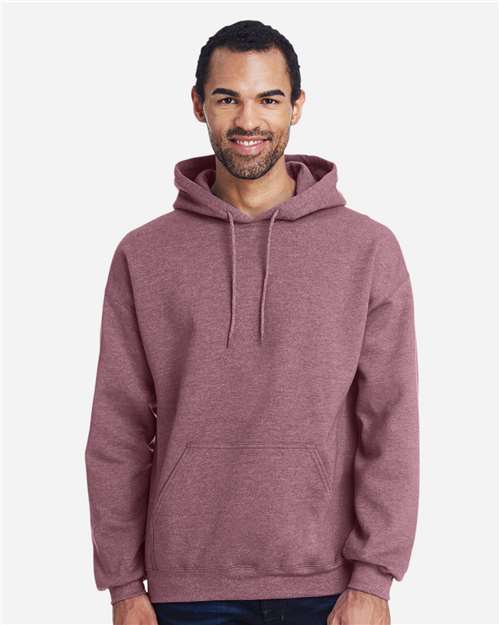
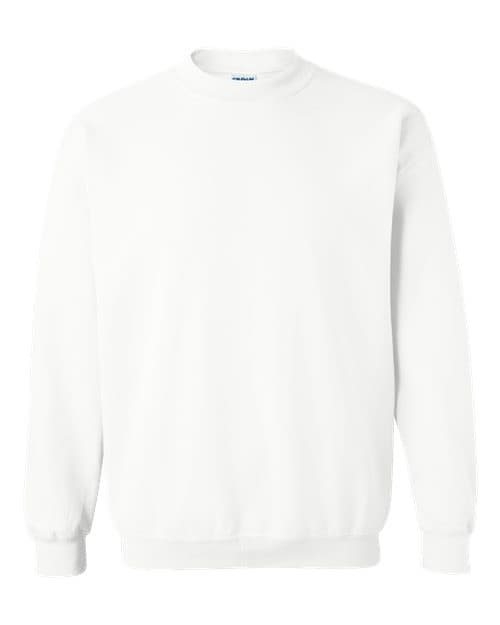
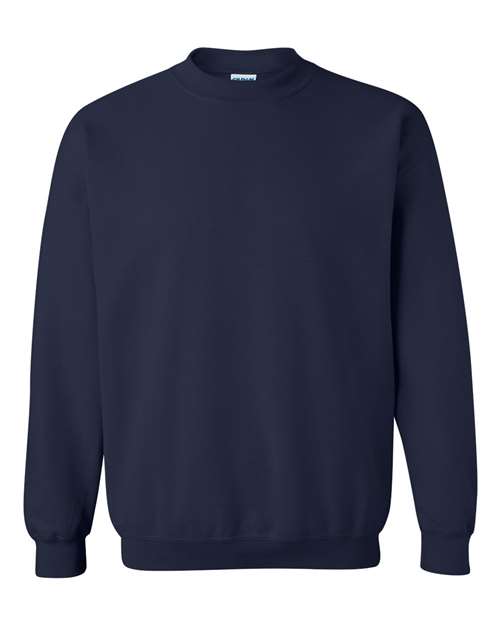
- Fleece — the Gildan 18500 Heavy Blend hoodie and Gildan 18000 crewneck are 8.0 oz 50/50 fleece: thick, dimensionally stable, and very forgiving. This is why embroidered hoodies are the highest-margin staple in the trade.
- Polos and heavyweight tees — a 5.6–6 oz polo or a heavyweight cotton tee hoops well with proper backing.
- Lightweight fashion tees and performance knits — doable, but they demand no-show mesh backing, lower stitch density, and realistic customer expectations.
Stabilizers by fabric
The stabilizer (backing) does half the work in machine embroidery. Match it to the fabric, not to habit:
| Fabric / garment | Stabilizer | Why |
|---|---|---|
| Fleece (18500, 18000) | 2.5–3 oz cutaway | Knit stretches over time; cutaway supports the design for the garment’s life |
| Polos and knit shirts | Cutaway or no-show mesh | Mesh avoids shadow-through on light colors |
| Lightweight tees, performance poly | No-show poly mesh cutaway | Soft against skin, invisible from the front, stabilizes thin knits |
| Structured caps | Tearaway (1 layer) | Buckram already stabilizes; tearaway just keeps the needle plate clean |
| Wovens (denim, canvas, twill) | Tearaway | Wovens don’t stretch, so permanent support is unnecessary |
The blank checklist, before you hoop
- 1
Stable weave and enough body
Pique, twill, and heavy jersey hold stitches; slub and burnout don't
- 2
A flat, seam-free field for the logo
3.5–4″ clear at left chest
- 3
No coatings that mark
Waterproof finishes show every needle hole
- 4
A year-round reorder guarantee
Uniform programs die when the blank disappears
The rule that covers 90% of decisions: knits get cutaway, wovens get tearaway. Add a water-soluble topping on fleece and pique so small lettering does not sink into the nap.
Left-chest sizing standards
Customers judge embroidery placement instantly, even if they cannot articulate why something looks off. The trade standards:
- Left-chest logo: 3”–4” wide (3.5” is the default), positioned 7–9” below the left shoulder seam and 4–6” from center front. On polos, align the bottom of the design roughly with the bottom of the placket.
- Hoodies: same left-chest spec, but check pocket and drawcord clearance; on full-zips, keep the design 3.5” wide or less so it does not crowd the zipper.
- Cap fronts: maximum 2.25” tall on a structured mid-profile crown like the Richardson 112.
- Minimum text height: 0.25” (about 6mm) for legible letters — smaller than that, switch to a satin-stitch font or drop the tagline entirely.
The digitizing cost math
Digitizing is a one-time cost per design — typically $15–$60 for a left-chest logo depending on complexity — and it amortizes across every piece you ever run with that file. That shapes pricing in two ways:
- Small orders carry the setup. A $40 digitizing fee on a 6-piece order adds $6.67 per piece; on a 48-piece order it adds $0.83. Either charge the fee separately or build a minimum order that absorbs it.
- Repeat accounts are nearly pure margin. Once the file exists, a reorder costs you blanks, thread, and machine time only. This is why uniform and team accounts are the backbone of embroidery shops — and why the blank you standardize on should be one you can restock identically for years.
Stitch count drives run cost too: a clean 3.5” left-chest logo runs about 5,000–8,000 stitches, roughly 6–9 minutes per head. A bloated file with unnecessary fills can double that and silently halve your hourly rate. Pay for good digitizing once; it repays you on every garment.
On the sourcing side: consistent restock is exactly why we built B2B Sportswear. 200,000+ SKUs across 100+ brands, true wholesale pricing from the first piece, six quantity-break tiers applied automatically in the cart, and you can mix sizes and colors within a style and still hit the break — which is how real uniform orders actually come in. Orders by 1 PM EST ship same-day from our closest US warehouse in plain unbranded packaging, and Ground shipping is free at $265+.
Where to buy embroidery blanks wholesale
Start with the workhorses: Gildan 18500 hoodies and 18000 crewnecks in the fleece category, polos for uniform programs, and caps led by the Richardson 112. No minimums, no annual fee, tax-exempt checkout with a resale certificate, and volume tiers on the bulk pricing page. More shop-specific guidance lives on our embroiderers page.
FAQ
What are the best blanks for embroidery?
Heavier, tighter garments: 8 oz fleece like the Gildan 18500 hoodie and 18000 crewneck, 5.6+ oz polos, and structured caps like the Richardson 112. Their stability resists thread-tension pull, so designs stay registered and pucker-free. Lightweight fashion tees can be embroidered but need mesh cutaway backing and reduced density.
Can you embroider on hoodies?
Yes — hoodies are among the best embroidery garments made. Hoop through the single front layer (keep the pocket and drawcords clear), use a 2.5–3 oz cutaway stabilizer, and add a water-soluble topping so fine lettering does not sink into the fleece nap. An 8 oz blend like the Gildan 18500 hoops flatter than lightweight fashion fleece.
Should I use cutaway or tearaway stabilizer?
Cutaway for anything knit — tees, polos, fleece — because knits stretch and the backing must support the stitches permanently. Tearaway for wovens like twill, denim, and canvas, and for structured caps where the buckram already provides stability. When in doubt on a garment, cutaway is the safer default.
How much does digitizing a logo cost?
A standard left-chest logo typically costs $15–$60 to digitize, paid once per design. Spread over a 48-piece order that is under a dollar per garment, and reorders cost nothing extra — which is why embroidery shops price small first orders with a setup fee and treat repeat uniform accounts as their most profitable work.