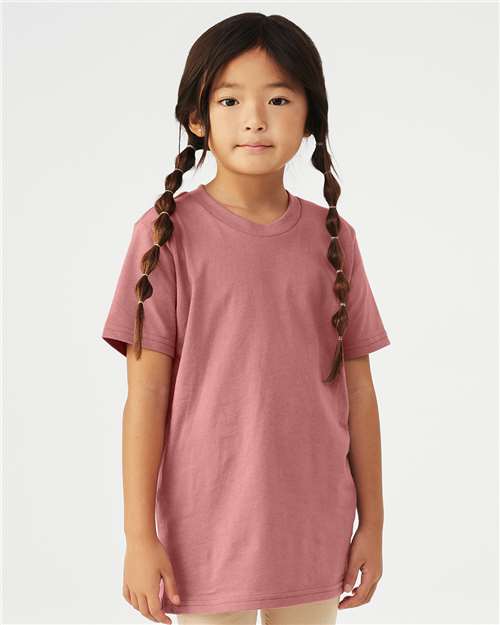
Youth apparel is the quiet workhorse of the decoration business. Schools order spirit wear every fall, teams re-up every season, camps buy every summer — and the buyer is an organization with a budget, not a consumer comparing prices at midnight. But children’s apparel is also the one category where a federal law applies to what you print and how you track it. This guide covers the compliance basics, the sizing, the best youth blanks, and how institutional buyers actually order.
CPSIA basics for decorators (not legal advice)
The Consumer Product Safety Improvement Act (CPSIA) regulates products designed for children 12 and under. If you decorate and sell youth shirts, you are a manufacturer in the eyes of the CPSC, and three things matter most:
- Lead limits. Total lead content in any accessible component — including printed ink — must stay under 100 ppm. Reputable plastisol, water-based, and DTG ink lines sold in the US are formulated CPSIA-compliant; keep the manufacturer’s compliance statements on file for every ink you use on youth garments.
- Tracking labels. Children’s products need a permanent tracking mark identifying the producer, production date, and batch. Most decorators satisfy this with a printed neck label or a hang tag plus records tying the job number to garment lot and ink batch.
- Certificates. Sellers of children’s products issue a Children’s Product Certificate (CPC) based on third-party testing. Major mills like BELLA+CANVAS, Hanes, and Gildan test their youth blanks and make compliance documentation available — one more reason to stick to name-brand blanks for kids’ jobs rather than unbranded imports.
None of this is hard, but it is paperwork. Set up the folder once — ink statements, blank mill certs, a job log — and every school order after that is routine.
Youth sizing: where orders go wrong
Youth sizes run XS–XL (roughly ages 4–14), and they do not line up with age as neatly as parents assume. Two traps:
| Youth size | Typical age | Chest width (approx.) |
|---|---|---|
| YXS | 4–5 | ~14” |
| YS | 6–7 | ~15” |
| YM | 8–10 | ~16” |
| YL | 10–12 | ~17” |
| YXL | 12–14 | ~18” |
Youth blanks cost almost the same as adult
Price your youth pieces like adult pieces — the blank cost gap is pennies, and the print labor is identical.
Trap one: a youth XL is close to an adult small, so middle-school orders should offer both youth and adult sizes of the same style — pick a blank family that exists in both cuts so the color matches across the run. Trap two: print size. A 12” adult front print swallows a YS shirt; scale youth art to roughly 7–9” wide and keep one design file per size group.
The best youth blanks to stock
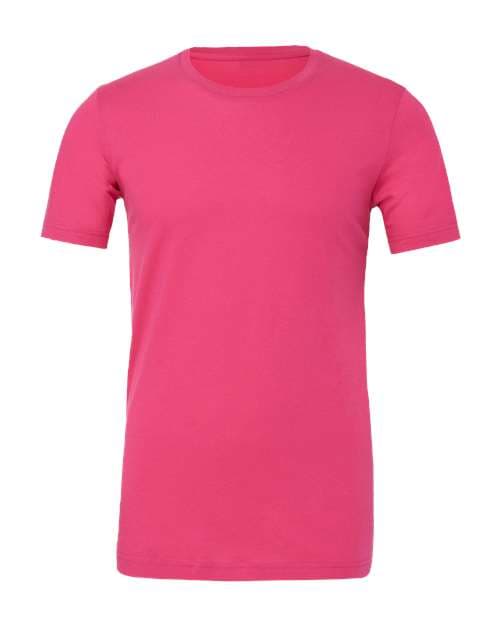
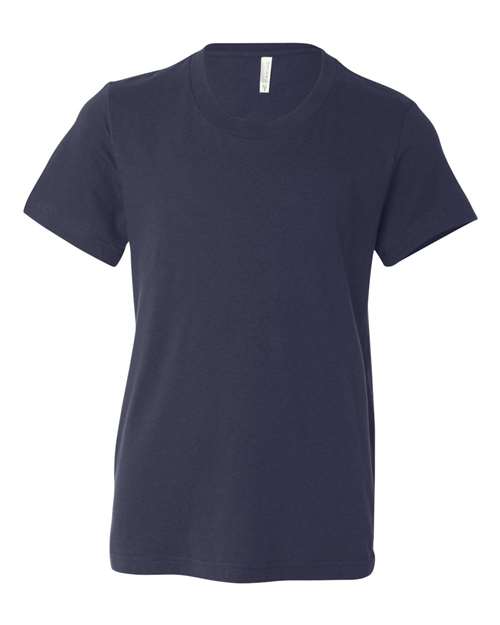
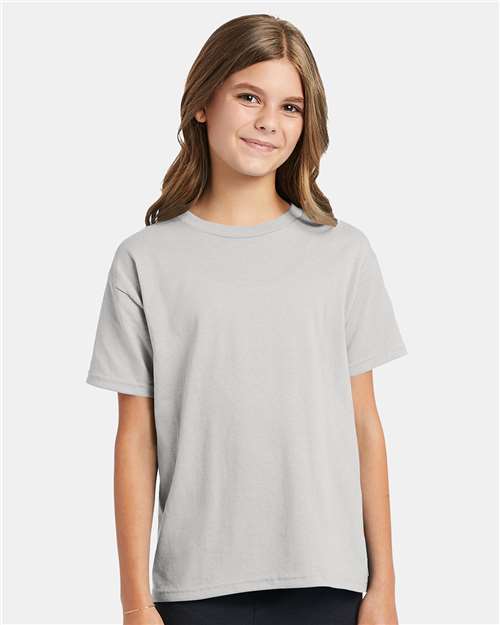
BELLA+CANVAS 3001Y — the premium pick
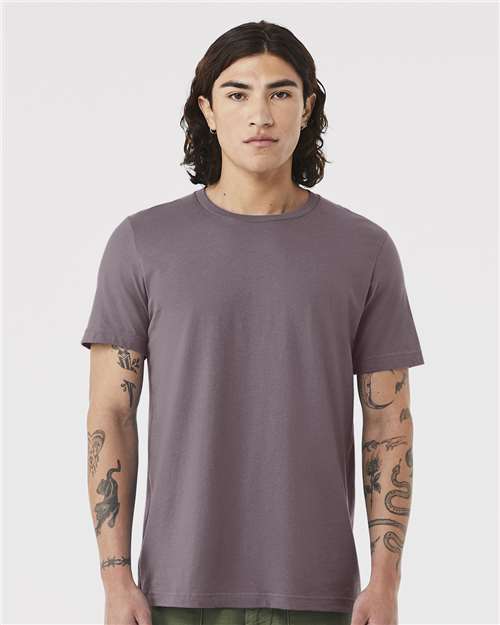
The youth version of the best-selling retail-fit tee: 4.2 oz Airlume combed ring-spun cotton, side-seamed, and the same color palette as the adult 3001. That adult/youth color match is the killer feature for family events and school merch stores. Best DTG surface of the three.
Hanes 498Y — the soft mid-tier
The youth Perfect-T: 4.5 oz, 100% ring-spun cotton at a price between commodity and premium. Softer and more modern-fitting than old-school heavyweights, and a favorite for camps that want comfort without boutique pricing. View the 498Y.
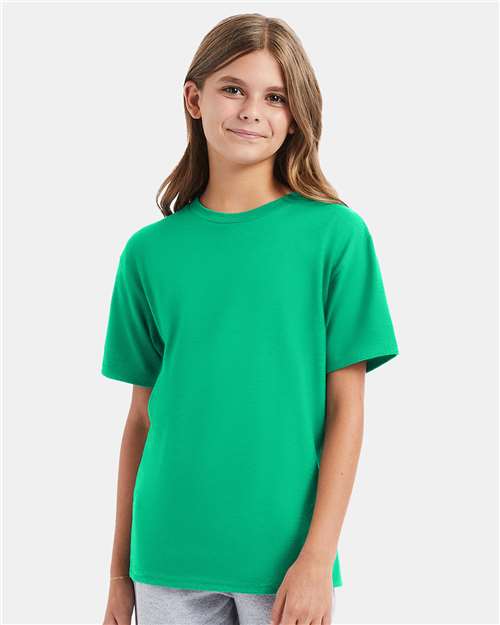
Hanes 5370 — the budget workhorse
A 5.2 oz 50/50 EcoSmart blend (with recycled polyester content) at a rock-bottom price point. The blend resists shrinking through industrial school laundering, and the price makes it the default for big field-day and fundraiser runs where every quarter per shirt counts. View the 5370.
How schools, teams, and camps actually buy
Institutional buyers behave differently from retail customers. They order in size curves (a typical elementary run skews YS/YM heavy), they need firm in-hand dates tied to an event, they often require invoicing or a PO instead of a card, and they reorder the same design annually — which makes the first job’s file organization worth real money. Expect late add-ons, too: three more YM shirts the week of the event is practically guaranteed, so choose a supplier that can fill a tiny top-up order fast.
That last point is where B2B Sportswear earns its place in a youth-apparel workflow: no minimums and no annual fee, true wholesale pricing from the first piece, and six quantity-break tiers applied automatically in the cart — youth and adult sizes of a style mix together toward the break. Orders over $265 ship free via Ground, dispatched same-day by 1 PM EST from the closest of our US warehouses in plain unbranded packaging, and tax-exempt checkout with a resale certificate keeps school invoicing clean.
Where to buy
All three youth blanks are in stock: BELLA+CANVAS 3001Y, Hanes 498Y, and Hanes 5370— or browse the full t-shirt catalog and check bulk pricing before quoting your next school run. Decorators can also join our screen printer program.
FAQ
Do CPSIA rules apply to printed t-shirts?
Yes, if the shirt is designed for children 12 and under. The decorated shirt must meet lead limits (under 100 ppm in any accessible component, including ink), carry a permanent tracking label, and be covered by a Children’s Product Certificate. Using name-brand youth blanks and CPSIA-compliant inks with documentation on file covers the substance of compliance.
What youth size fits an average 8-year-old?
Youth Medium in most brands — roughly a 16” chest width. Sizing varies by mill, so put the specific brand’s size chart on every school order form rather than relying on age alone.
What is the best youth t-shirt for screen printing?
For print quality, the BELLA+CANVAS 3001Y — its combed ring-spun surface holds detail best. For budget volume runs, the Hanes 5370 50/50 prints cleanly with low-bleed inks and survives school laundering. The Hanes 498Y splits the difference on price and softness.
How should print size change for youth shirts?
Scale front prints to roughly 7–9” wide for youth sizes versus 11–12” for adults, and keep a separate art file per size group. Printing adult-sized art on a YS shirt is the most common visual mistake in school orders.