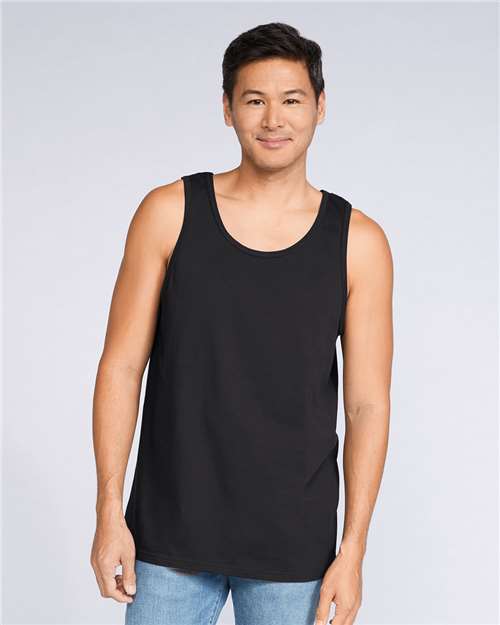
Every summer the same support ticket lands: a shop orders 144 tank tops for a gym, prints them the same way it prints tees, and half the run comes back with cracked ink on the ribbing or a DTG print that looks washed out. The tank was not defective. It was the wrong tank for the process.
This guide sorts blank tank tops by print method — screen printing, DTG, and DTF — and explains which knit, fiber, and cut each one needs. If you are looking for the seasonal picks and the best sellers, our summer tank top roundup covers that. This post is about the production decision.
The one rule: match the knit to the ink
Tank tops come in two knits. Jersey is the same flat single-knit as a t-shirt — smooth surface, minimal stretch, predictable ink behavior. Rib(1x1 or the fine “micro rib”) has raised vertical ridges that stretch sideways. Rib looks great on the body and terrible under a squeegee, because the ink film bridges the ridges and then cracks the first time the garment stretches.
Fiber matters second. 100% cotton takes every ink system. Cotton/poly blends print fine with plastisol and DTF but lose vibrancy with DTG, and the polyester share brings dye migration risk on dark colors. Triblends (cotton, poly, rayon) sit in between: soft, light, and only reliably printable with soft-hand plastisol or DTF.
Best blank tank tops for screen printing
Screen printing wants a flat jersey with a tight knit so the mesh deposits an even film. Weight helps: a 6 oz cotton tank holds registration on a four-color job better than a 3.7 oz fashion tank that pulls on the platen.
- Gildan 2200 Ultra Cotton tank (from $5.03) — 6 oz, 100% cotton, the same fabric as the Gildan 2000 tee. Stiff enough to stay square on the pallet, forgiving of heavy plastisol deposits, and the go-to for team and event runs. Six stock colors covers the basics.
- Next Level 3633 unisex cotton tank (from $6.45) — 4.3 oz combed ring-spun cotton with a narrower shoulder than the Gildan. Flatter print surface than open-end cotton, so fine halftones and small type stay crisp. Ten colors in stock.
- Comfort Colors 9360 garment-dyed tank (from $8.75) — 6.1 oz heavyweight ring-spun cotton, garment dyed in 34 colors. The premium screen-print tank: water-based and discharge inks look exceptional on it, and the garment-dye palette sells at retail prices.
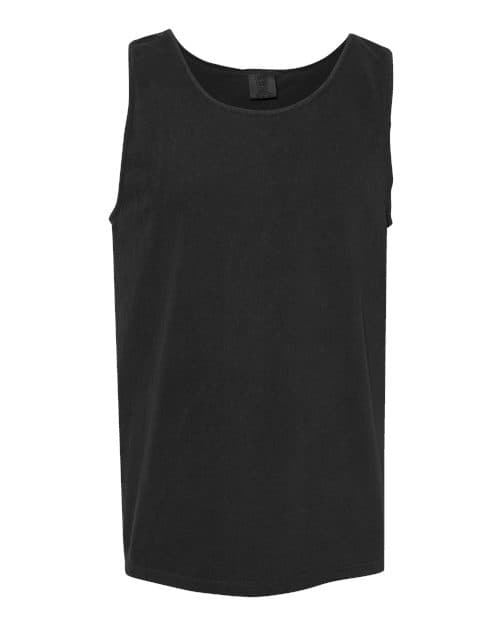
Two screen-printing specifics for tanks. First, the print area is narrower than a tee — plan front designs at 8–9” wide instead of 11–12”, or the edges wrap into the armhole binding. Second, use a tank-specific pallet or tape the straps flat; a loose strap under the screen is the number one cause of ghost prints on the back.
Best blank tank tops for DTG
DTG pretreatment and pigment inks are built for cotton, and the smoother the cotton, the brighter the result. Ring-spun combed cotton is the target; open-end cotton prints acceptably but with visible fiber texture; anything over about 35% polyester goes flat.
- Gildan 64200 Softstyle tank (from $5.41) — 4.5 oz ring-spun cotton, the tank version of the Softstyle 64000. This is the value DTG tank: smooth face, consistent pretreat absorption, and the same six core colors as the 2200.
- Next Level 3633— the combed ring-spun construction that makes it a good screen-print tank makes it an even better DTG tank. If you run both processes, this is the one blank that covers both.
- Comfort Colors 9360— garment-dyed cotton DTG-prints beautifully on light colors. On darks, the pigment dye can shift under pretreat; test one before committing a run.
DTG platen setup for tanks is the same as for tees, with one adjustment: lower the platen height slightly for lightweight tanks so the print head does not catch a lifted armhole edge. Most shops also drop pretreat volume 10–15% on a 4.3–4.5 oz tank versus a 6 oz tee, because the thinner fabric saturates faster.
Best blank tank tops for DTF
DTF is the great equalizer. The design is printed on film, powdered with adhesive, and pressed onto the garment — so fiber content, knit texture, and color barely matter. This is the method that unlocks ribbed tanks, racerbacks with narrow print areas, and poly-heavy performance tanks.
- Next Level 1533 women’s Ideal racerback (from $3.90) — 4.3 oz ring-spun cotton, junior fit, 24 colors in stock. The most-ordered women’s tank in our catalog. The racerback leaves a narrow back panel that DTF handles cleanly; keep front designs under 8” wide.
- Next Level 6733 women’s triblend racerback (from $5.93) — the triblend version, 18 colors. Rayon content gives it the drape customers pay for and makes it a DTF-first garment: DTG goes muted, plastisol needs a low-cure ink.
- Ribbed and micro-rib tanks— DTF only. Press with a slightly lower temperature and a firm pillow under the rib so the adhesive bonds to the ridges instead of bridging them.
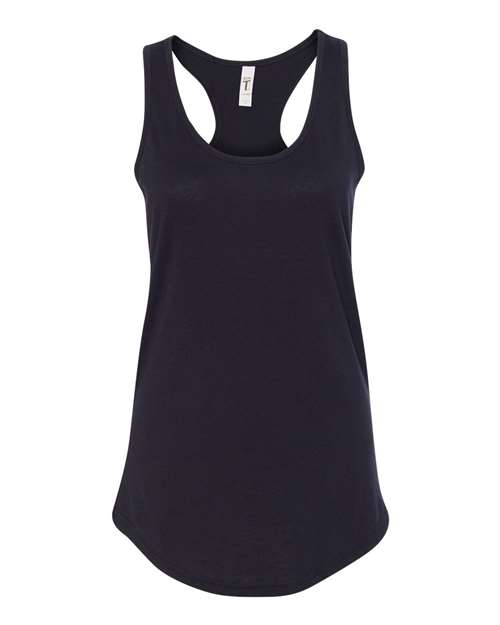
The DTF trade-off is hand feel. A transfer sits on top of the fabric, and on a 3.7 oz triblend tank that film is noticeably heavier than the garment around it. Keep DTF designs on lightweight tanks small or use a thin, stretchable powder; the DTF blanks guide covers powder and press settings in detail.
Picking a tank blank by print method
- 1
Identify the ink system first
Plastisol, water-based, DTG, or DTF — the blank follows the process, not the other way around
- 2
Screen print → flat cotton jersey, 4.3–6 oz
Gildan 2200, Next Level 3633, Comfort Colors 9360
- 3
DTG → ring-spun combed cotton only
Gildan 64200, Next Level 3633; avoid poly-heavy blends
- 4
DTF → anything, including rib and triblend
Next Level 1533, 6733; watch hand feel on lightweight tanks
- 5
Shrink the print area
8–9" wide max on the front; tape straps flat on the pallet
Comparison: tank blanks by print method
| Style | Fabric | Screen print | DTG | DTF |
|---|---|---|---|---|
| Gildan 2200 | 6 oz open-end cotton jersey | Excellent | Acceptable | Excellent |
| Gildan 64200 | 4.5 oz ring-spun cotton jersey | Good | Excellent | Excellent |
| Next Level 3633 | 4.3 oz combed ring-spun jersey | Excellent | Excellent | Excellent |
| Next Level 1533 racerback | 4.3 oz ring-spun jersey, junior fit | Good (narrow field) | Excellent | Excellent |
| Next Level 6733 triblend | Poly/cotton/rayon jersey | Good (low-cure ink) | Muted | Excellent |
| Ribbed / micro-rib tanks | 1x1 or micro rib knit | Poor | Poor | Good |
Unisex vs women’s cuts, and sizing
Unisex tanks (Gildan 2200, 64200, Next Level 3633) are cut like the matching t-shirt with the sleeves removed: straight body, wide straps, a print area close to a tee. Women’s racerbacks(Next Level 1533, 6733) are junior fit — narrower body, shorter length, and a back panel that tapers to a few inches between the shoulder blades. They fit smaller than the tag suggests; a customer who wears a women’s medium tee often needs a large racerback.
For size runs, start from the curve in our bulk size run guide and make two adjustments. Shift unisex tanks one size up, because buyers wear tanks looser than tees and the Gildan 2200 in particular runs snug across the chest. Weight women’s racerbacks toward S and M — those two sizes are typically 60% of a gym or event order. Most unisex tanks stop at 2XL or 3XL, so confirm the top size before quoting a job that needs extended sizes.
Where to buy blank tank tops for printing
Every tank in this guide is in stock at B2B Sportswear at wholesale pricing from the first piece, with no minimum order and no membership fee. Quantity breaks apply automatically in the cart and you can mix colors and sizes within a style — 24 black, 24 grey, and 24 white Gildan 2200s all count toward the same tier. Orders placed by 1 PM EST ship the same day from the nearest US warehouse, and orders over $265 ship free via Ground. If you print for resale, register a resale certificate for tax-exempt checkout, and see bulk pricing for the full break schedule.
FAQ
What is the best blank tank top for screen printing?
A 100% cotton jersey tank with a flat, tight knit — the Gildan 2200 Ultra Cotton tank or the Next Level 3633 are the standard choices. Both give a stable print surface for plastisol and hold registration on multi-color jobs.
Can you DTG print on a tank top?
Yes, as long as the tank is ring-spun cotton or a high-cotton blend. DTG inks bond to cotton fiber, so a ring-spun jersey tank like the Gildan 64200 prints vividly, while a 50% polyester tank comes out muted.
Can you print on ribbed tank tops?
Screen printing and DTG both struggle on rib knit because the raised ridges break the ink film. DTF is the reliable method for ribbed tanks: the transfer film bridges the texture and stays intact through stretch and wash.
What size run should I order for tank tops?
Order the same S–XL curve you would for t-shirts but shift one size larger for unisex tanks, because many buyers wear tanks loose. Women’s racerback tanks run junior-fit and sell heaviest in S and M.