



Every print shop hits this eventually: a run of white prints on red or navy polyester looks perfect off the dryer, ships to the customer, and turns pink or blue-tinged within days. Nothing was “wrong” with the ink or the art. The garment itself attacked the print.
What’s actually happening
Polyester is dyed with disperse dyes, which bond by turning to gas under heat and locking into the fiber — the same mechanism as sublimation. The problem: that reaction is reversible. Reheat the fabric past roughly 280–300°F — exactly what a plastisol cure or a hot transfer press does — and some of that dye re-gasses, migrates upward, and re-solidifies inside your ink layer. White becomes pink. Athletic gold becomes greenish. And because migration continues slowly as the dye keeps moving, prints that looked fine on Friday are ruined by the following week.
Any fabric containing polyester can migrate — 100% poly performance wear worst of all, but 50/50 and even tri-blends will do it under enough heat. The notorious bleeders are the heavily saturated colors: red, maroon, navy, kelly green, purple, and royal.
Prevention: five layers of defense
- 1. Use low-cure / low-bleed inks. Modern low-cure plastisol fuses at 260–270°F — below the temperature where disperse dye starts moving in volume. This is the single biggest lever.
- 2. Print a dye-blocking underbase. Barrier greys and blocker underbases contain material that traps migrating dye before it reaches your top color. On red poly, white ink without a blocker is a coin flip.
- 3. Don’t over-flash and don’t over-dry. Every second above cure temperature invites more migration. Verify actual ink temperature with a donut probe instead of trusting the dryer panel.
- 4. For transfers (HTV/DTF), drop the temp. Press at 270–280°F with the shortest dwell that bonds, and use dye-blocking transfer films on bright poly. Our HTV blanks guide has the full press chart.
- 5. Test before the run. Print one, cure it, and put it in a hot box (or a car dashboard) overnight. Migration accelerates with heat — a 24-hour test catches what a straight-off-the-dryer inspection can’t.
Or: pick blanks that don’t fight you
Some jobs let you sidestep the problem entirely:
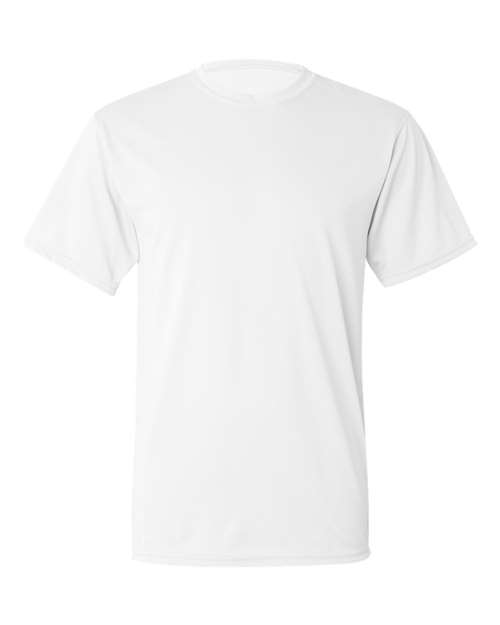
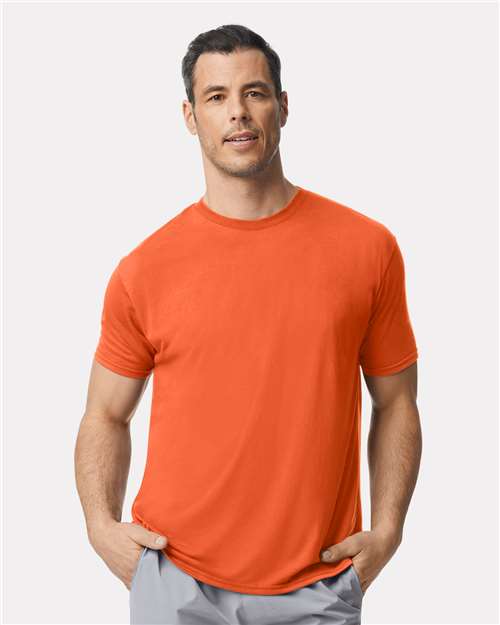
- White and light poly doesn’t migrate — there’s little dye to move. A white Gildan Performance 42000 prints (or sublimates) with zero risk.
- Design around dark ink. Migration tints light inks; black and navy prints on red poly are effectively immune.
- Cotton-face blends put cotton on the print surface with poly behind it, cutting the migration path.
- If the job is photos-on-white-poly, skip inks entirely and sublimate — see our sublimation blanks guide.
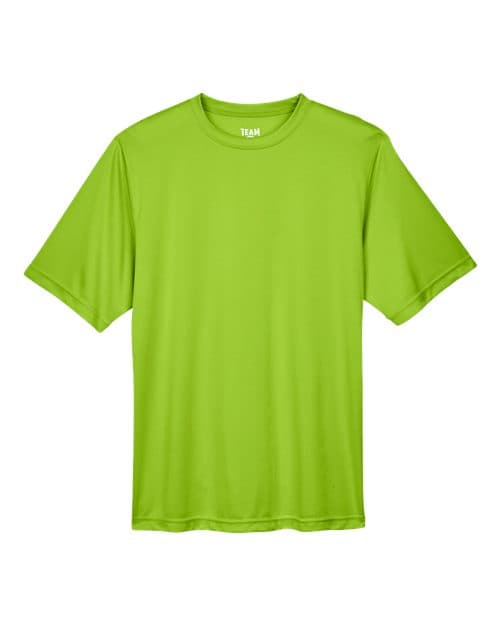
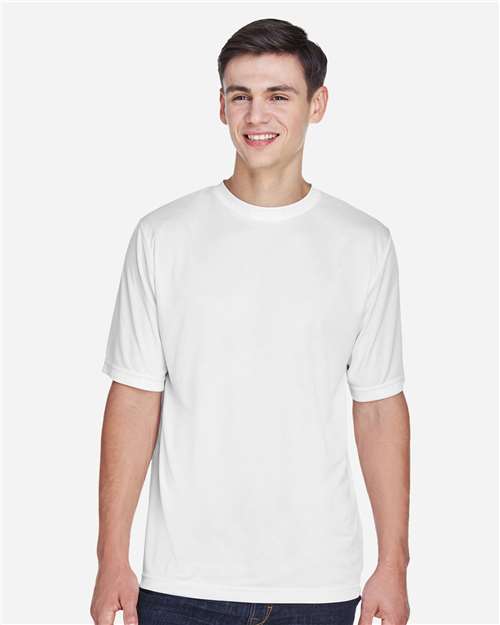
For team work in bright colors — where migration risk is highest — stock performance blanks with deep color ranges like the Team 365 Zone Performance or the budget Augusta Nexgen (~$4), quote with a blocker underbase built into the price, and you’ll never eat a reprint.
Quick reference
| Job | Migration risk | Defense |
|---|---|---|
| White ink on red/navy 100% poly | Severe | Low-cure ink + blocker underbase + 24h test |
| Light ink on bright 50/50 | Moderate | Low-cure ink, minimal flash |
| DTF/HTV on bright poly | Moderate | 270–280°F, dye-blocking film |
| Dark ink on any poly | Low | Standard practice |
| Anything on white poly | None | — |
The temperature window that decides everything
Low-cure inks finish below the migration zone; a standard cure runs straight through it.
All the performance blanks mentioned here are in our activewear category at wholesale pricing with no minimums — order singles to run your migration tests before committing to the full job.
FAQ
Why did my white print turn pink on a red shirt?
Dye migration: the disperse dye in polyester re-gassed under curing heat and moved into your ink layer. Red, maroon, and navy polyester are the worst offenders, and the tint often appears days after printing.
What temperature causes dye migration?
Disperse dyes start moving meaningfully around 280–300°F. Standard plastisol cures (320°F+) are well inside the danger zone — which is why low-cure inks that fuse at 260–270°F are the primary fix.
Does dye migration happen with DTF transfers?
It can, on bright polyester — the press heat triggers the same reaction. Press at 270–280°F with the shortest effective dwell, and use dye-blocking DTF films for bright garment colors.
Which blank shirts avoid dye migration?
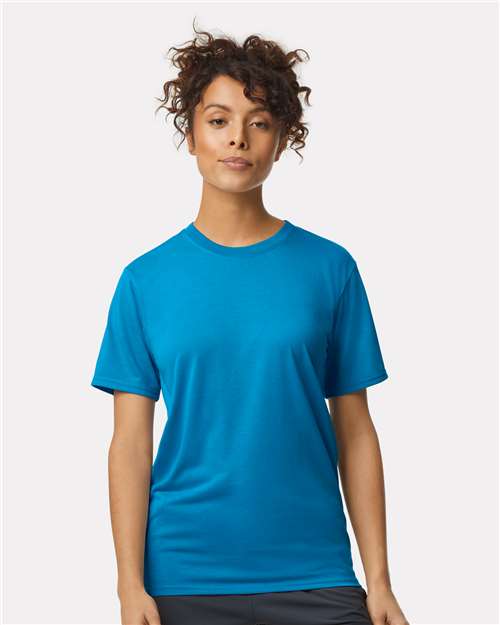
White and light-color polyester (nothing to migrate), cotton-faced blends, or any blank when printing dark inks. For bright team colors, use low-cure ink plus a blocker underbase on blanks like the Team 365 Zone Performance or Gildan 42000.