


Heat transfer vinyl built more home-based apparel businesses than any other method — a cutter, a press, and a stack of blanks is a working shop. But HTV is also the method most sensitive to the blank underneath: vinyl bonds to the surface of the fabric, so a fuzzy, textured, or coated face means weak adhesion and edge lift after a few washes. The blanks below are ranked by how well vinyl actually bonds — and stays bonded.
What makes a shirt good for HTV
- Smooth face. Ring-spun and combed cotton give vinyl a flat surface to grip. Open-end (carded) cotton is fuzzier — it works, but fine details lift sooner. (More on the difference in our ring-spun vs open-end guide.)
- Heat tolerance. Standard HTV presses at 290–320°F for 10–15 seconds. 100% cotton shrugs that off; polyester needs low-temp vinyl and care around dye migration.
- Minimal texture. Heavy slub, waffle, and pigment-dyed washes look great but fight adhesion.
Best overall: Gildan Softstyle 64000
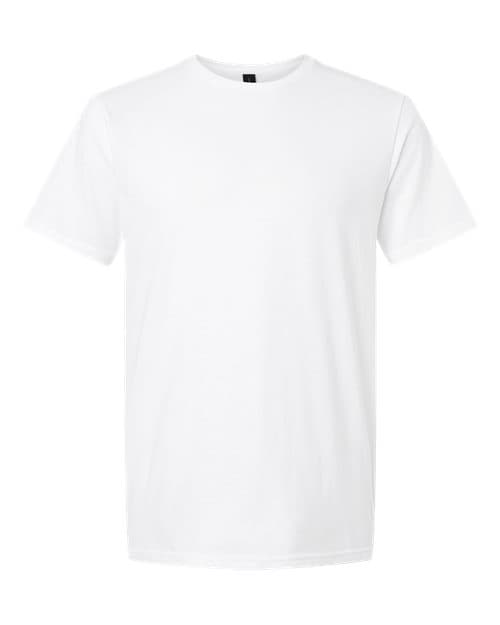
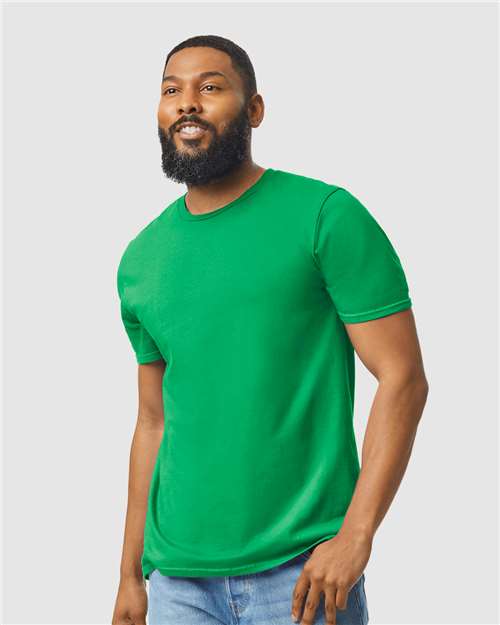
The Gildan Softstyle 64000 is the HTV default for a reason: a smooth 4.5 oz ring-spun face at around $4 wholesale, in 60+ colors, in stock everywhere all year. Vinyl beds into it cleanly, the shirt survives high press temps without scorch marks, and the price leaves margin even on one-off personalized orders.
One tier up, the BELLA+CANVAS 3001 has an even tighter combed ring-spun face — the choice when your customer is a boutique or the design has fine linework. See our Gildan vs BELLA+CANVAS comparison for the full breakdown.
Best budget: Gildan 5000 and Hanes 5250
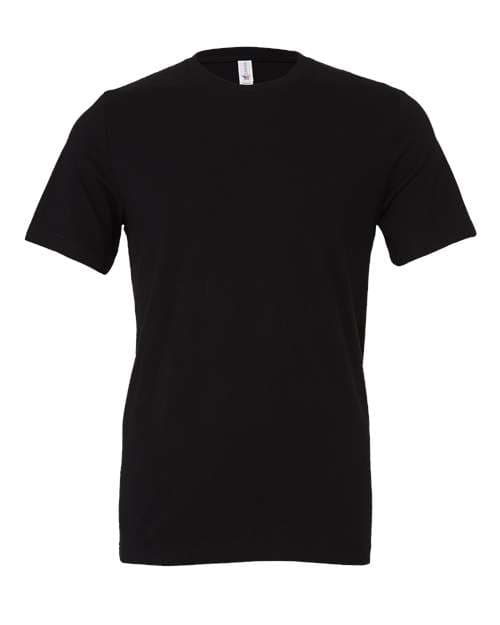
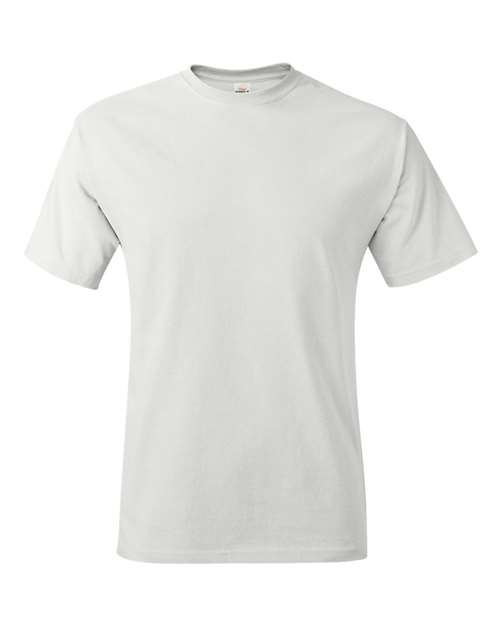
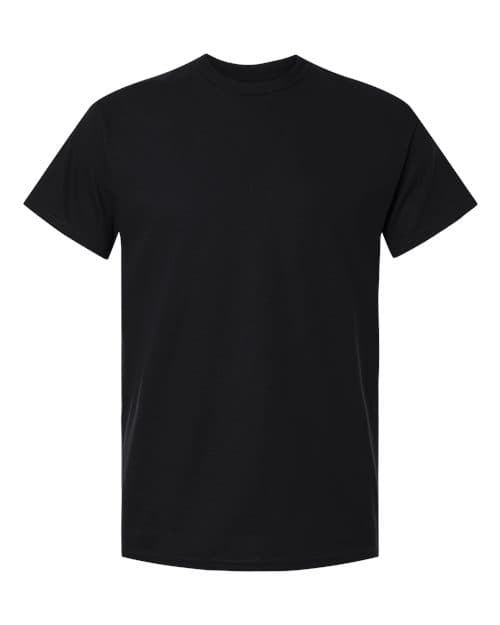
For spirit-wear and event jobs where the quote wins on price, the Gildan Heavy Cotton 5000 (~$3.20) and Hanes Authentic 5250 (~$3.60) both take vinyl fine — the open-end face is slightly fuzzier, so favor bold shapes over hairline detail, and give the press a 2–3 second pre-press to flatten the fibers first.
Polyester and blends: lower the temp
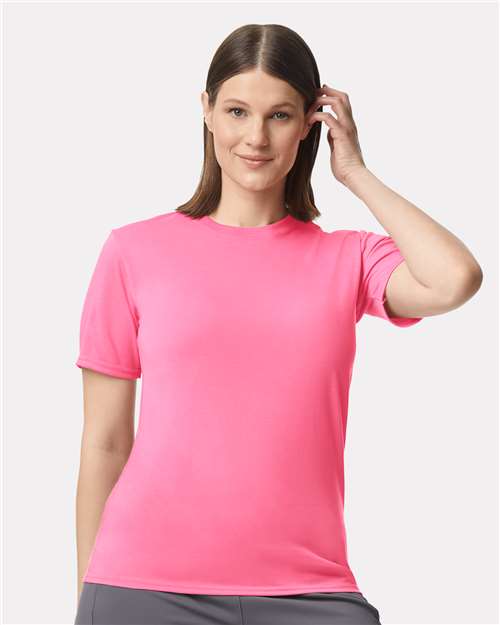
Performance tees like the Gildan Performance 42000 and Team 365 Zone Performance are huge for team and gym orders — but 100% polyester changes the rules. Use a low-temp stretch vinyl (270–290°F), press for the minimum time, and on bright reds, maroons, and navies use a dye-blocking vinyl so the shirt color doesn’t ghost through white vinyl a week later. Our dye migration guide covers exactly why that happens and how to stop it.
Press settings cheat sheet
| Fabric | Vinyl type | Temp | Time |
|---|---|---|---|
| 100% cotton | Standard PU HTV | 305–320°F | 10–15s |
| 50/50 blend | Standard PU HTV | 290–305°F | 10–12s |
| 100% polyester | Low-temp / stretch HTV | 270–290°F | 8–12s |
| Bright poly (red/navy) | Dye-blocking HTV | 270°F | Minimum for bond |
HTV press temperature by fabric
Always confirm against your vinyl's spec sheet — brands vary by 10–20°F.
Always confirm against your vinyl manufacturer’s spec sheet — brands vary by 10–20°F.
Why vinyl peels (it’s usually not the vinyl)
- No pre-press. 2–3 seconds first removes moisture and flattens fibers — skipping it is the #1 cause of edge lift.
- Pressing over seams. Uneven pressure means uneven bond. Use a pressing pillow near collars and pockets.
- Peeling at the wrong temperature. Hot-peel and cold-peel vinyls are not interchangeable — check the carrier instructions.
- Washing too soon. Tell customers: 24 hours before the first wash, inside out, cold, no dryer sheets.
If you run an HTV business, buying blanks retail is the fastest way to erase your margin. At B2B Sportswear every blank above is wholesale-priced from the first piece with no minimums — order three shirts for tonight’s Etsy orders or three cases for a team job, and quantity breaks apply automatically.
FAQ
What is the best shirt for heat transfer vinyl?
A smooth ring-spun cotton tee. The Gildan Softstyle 64000 is the best value; the BELLA+CANVAS 3001 is the premium pick for fine detail. Both give vinyl a flat, tight surface to bond to.
Can you put HTV on 100% polyester shirts?
Yes — use a low-temperature stretch vinyl at 270–290°F and the shortest press time that bonds. On bright colors, use a dye-blocking vinyl to prevent the garment dye from migrating into the design.
Why is my vinyl peeling after washing?
Usually: no pre-press, wrong peel temperature, pressure lost over a seam, or washing within 24 hours. The blank matters too — textured or coated fabrics hold vinyl poorly.
Where can I buy wholesale blank shirts for my HTV business?
B2B Sportswear sells Gildan, BELLA+CANVAS, Hanes, and Team 365 blanks at true wholesale prices with no minimum order and no membership fee — same-day shipping from US warehouses nationwide on orders placed by 1 PM EST.